
Granit o'zining o'ta mustahkamligi, zichligi, chidamliligi va korroziyaga chidamliligi uchun qazib olinadigan magmatik tog 'jinsining bir turidir. Ammo granit ham juda ko'p qirrali - u nafaqat kvadrat va to'rtburchaklar uchun! Darhaqiqat, biz muntazam ravishda barcha o'zgarishlarning shakllari, burchaklari va egri chiziqlarida ishlab chiqarilgan granit komponentlari bilan ishonchli ishlaymiz va ajoyib natijalarga erishamiz.
Bizning zamonaviy ishlov berish texnologiyalarimiz tufayli kesilgan yuzalar nihoyatda tekis bo'lishi mumkin. Bu xususiyatlar granitni maxsus o'lchamdagi va maxsus dizayndagi mashina asoslari va metrologiya komponentlarini yaratish uchun ideal materialga aylantiradi. Granit:
■ ishlov beriladigan
■ kesilgan va tugatilganda aniq tekis
■ zangga chidamli
■ bardoshli
■ uzoq muddatli
Granit komponentlarini tozalash ham oson. Maxsus dizaynlarni yaratishda, uning ustun afzalliklari uchun granitni tanlashga ishonch hosil qiling.
STANDARTLAR / YUQORI KIYIMGA CHIDAMLI QO'LLANMALAR
ZHHIMG tomonidan standart sirt plitalari mahsulotlari uchun ishlatiladigan granit yuqori kvarts tarkibiga ega, bu esa aşınma va shikastlanishga nisbatan yuqori qarshilikni ta'minlaydi. Bizning Superior Black ranglarimiz suvni yutish darajasi past, bu sizning aniqlik o'lchagichlaringiz plitalarga o'rnatilganda zanglash ehtimolini kamaytiradi. ZHHIMG tomonidan taqdim etiladigan granit ranglari kamroq porlashga olib keladi, bu esa plitalardan foydalanayotgan odamlar uchun ko'zning charchashini kamaytiradi. Biz bu jihatni minimal darajada ushlab turish uchun issiqlik kengayishini hisobga olgan holda granit turlarini tanladik.
MAXSUS ARIZALAR
Agar sizning arizangiz maxsus shakllar, tishli qo'shimchalar, uyalar yoki boshqa ishlov berish usullariga ega plastinka talab qilsa, siz Black Jinan Black kabi materialni tanlashingiz kerak bo'ladi. Ushbu tabiiy material yuqori qattiqlik, ajoyib tebranishlarni susaytiruvchi va yaxshilangan ishlov berish qobiliyatini ta'minlaydi.
Shuni ta'kidlash kerakki, rangning o'zi toshning jismoniy xususiyatlarining ko'rsatkichi emas. Umuman olganda, granitning rangi minerallarning mavjudligi yoki yo'qligi bilan bevosita bog'liq bo'lib, bu yaxshi sirt plastinka materialini tashkil etuvchi xususiyatlarga hech qanday ta'sir ko'rsatmasligi mumkin. Sirt plitalari uchun juda mos keladigan pushti, kulrang va qora granitlar, shuningdek, aniq qo'llanilish uchun mutlaqo yaroqsiz bo'lgan qora, kulrang va pushti granitlar mavjud. Granitning sirt plastinka materiali sifatida ishlatilishiga oid muhim xususiyatlari rang bilan hech qanday aloqasi yo'q va quyidagilar:
■ Qattiqlik (yuk ostida og'ish - Elastiklik moduli bilan ko'rsatilgan)
■ Qattiqlik
■ Zichlik
■ Aşınma qarshiligi
■ Barqarorlik
■ G'ovaklik
Biz ko'plab granit materiallarini sinovdan o'tkazdik va bu materiallarni taqqosladik. Nihoyat, natijaga erishdik, Jinan qora graniti biz bilgan eng yaxshi materialdir. Hind qora graniti va Janubiy Afrika graniti Jinan qora granitiga o'xshash, ammo ularning fizik xususiyatlari Jinan qora granitidan kamroq. ZHHIMG dunyoda ko'proq granit materiallarini qidirishda davom etadi va ularning fizik xususiyatlarini taqqoslaydi.
Loyihangiz uchun mos granit haqida ko'proq ma'lumot olish uchun biz bilan bog'laninginfo@zhhimg.com.
Turli ishlab chiqaruvchilar turli xil standartlardan foydalanadilar. Dunyoda ko'plab standartlar mavjud.
DIN standarti, ASME B89.3.7-2013 yoki Federal spetsifikatsiya GGG-P-463c (Granit sirt plitalari) va boshqalar ularning texnik xususiyatlari uchun asos sifatida.
Va biz sizning talablaringizga muvofiq granit aniqlikdagi tekshirish plitasini ishlab chiqarishimiz mumkin. Agar siz ko'proq standartlar haqida ko'proq ma'lumotga ega bo'lishni istasangiz, biz bilan bog'lanishga xush kelibsiz.
Tekislik deganda sirtdagi barcha nuqtalarning ikkita parallel tekislik, asos tekisligi va tom tekisligi ichida joylashganligi tushuniladi. Tekisliklar orasidagi masofani o'lchash sirtning umumiy tekisligini anglatadi. Bu tekislik o'lchovi odatda tolerantlikka ega va darajani belgilashni o'z ichiga olishi mumkin.
Masalan, uchta standart sinf uchun tekislik bardoshliligi federal spetsifikatsiyada quyidagi formula bilan aniqlanganidek belgilanadi:
■ Laboratoriya darajasi AA = (40 + diagonal kvadrat/25) x .000001" (bir tomonlama)
■ Tekshirish darajasi A = Laboratoriya darajasi AA x 2
■ Asboblar xonasi B darajasi = Laboratoriya darajasi AA x 4.
Standart o'lchamdagi sirt plitalari uchun biz ushbu spetsifikatsiya talablaridan oshib ketadigan tekislik bardoshliligini kafolatlaymiz. Tekislikdan tashqari, ASME B89.3.7-2013 va Federal Spetsifikatsiya GGG-P-463c quyidagi mavzularni qamrab oladi: takroriy o'lchov aniqligi, sirt plastinka granitlarining material xususiyatlari, sirt qoplamasi, tayanch nuqtasining joylashuvi, qattiqlik, tekshirishning maqbul usullari, tishli qo'shimchalarni o'rnatish va boshqalar.
ZHHIMG granit sirt plitalari va granit tekshirish plitalari ushbu spetsifikatsiyada ko'rsatilgan barcha talablarga javob beradi yoki ulardan oshib ketadi. Hozirgi vaqtda granit burchak plitalari, parallelliklar yoki asosiy kvadratlar uchun aniq spetsifikatsiya mavjud emas.
Va siz boshqa standartlar uchun formulalarni topishingiz mumkinYUKLAB OLING.
Birinchidan, plastinkani toza saqlash muhimdir. Havoda tarqaladigan abraziv chang odatda plastinkaning eng katta aşınma va yirtilish manbai hisoblanadi, chunki u ish qismlariga va o'lchagichlarning aloqa yuzalariga singib ketadi. Ikkinchidan, plastinkani chang va shikastlanishdan himoya qilish uchun uni yoping. Ishlatilmayotganda plastinkani yopib qo'yish, plastinkani vaqti-vaqti bilan aylantirish orqali, bitta joy ortiqcha ishlatilmasligi uchun va o'lchagichdagi po'lat aloqa yostiqchalarini karbid yostiqchalari bilan almashtirish orqali aşınma muddatini uzaytirish mumkin. Shuningdek, plastinkaga ovqat yoki alkogolsiz ichimliklarni qo'yishdan saqlaning. E'tibor bering, ko'plab alkogolsiz ichimliklar tarkibida uglerod yoki fosfor kislotasi mavjud bo'lib, ular yumshoqroq minerallarni eritib, yuzasida kichik chuqurchalar qoldirishi mumkin.
Bu likopcha qanday ishlatilayotganiga bog'liq. Iloji bo'lsa, likopchani kunning boshida (yoki ish smenasida) va oxirida tozalashni tavsiya qilamiz. Agar likopcha ifloslansa, ayniqsa yog'li yoki yopishqoq suyuqliklar bilan ifloslansa, uni darhol tozalash kerak.
Plastinani muntazam ravishda suyuq yoki ZHHIMG suvsiz sirt plastinka tozalagichi bilan tozalang. Tozalash eritmalarini tanlash muhim ahamiyatga ega. Agar uchuvchan erituvchi (atseton, lak erituvchisi, spirt va boshqalar) ishlatilsa, bug'lanish sirtni sovutadi va uni buzadi. Bunday holda, ishlatishdan oldin plitaning normallashishiga imkon berish kerak, aks holda o'lchov xatolari yuzaga keladi.
Plastinkaning normallashishi uchun zarur bo'lgan vaqt plastinkaning o'lchamiga va sovutish miqdoriga qarab o'zgaradi. Kichikroq plitalar uchun bir soat yetarli bo'lishi kerak. Kattaroq plitalar uchun ikki soat kerak bo'lishi mumkin. Agar suvga asoslangan tozalagich ishlatilsa, bug'lanish orqali sovutish ham bo'ladi.
Plastinka suvni ham ushlab qoladi va bu sirt bilan aloqa qilgan metall qismlarning zanglashiga olib kelishi mumkin. Ba'zi tozalagichlar quriganidan keyin yopishqoq qoldiq qoldiradi, bu esa havodagi changni o'ziga tortadi va aslida aşınmayı kamaytiradi, balki oshiradi.
Bu plastinkadan foydalanish va atrof-muhitga bog'liq. Biz yangi plastinka yoki aniq granit aksessuarini sotib olinganidan keyin bir yil ichida to'liq qayta kalibrlashni tavsiya qilamiz. Agar granit sirt plitasi ko'p ishlatilsa, bu vaqt oralig'ini olti oygacha qisqartirish tavsiya etiladi. Elektron sath yoki shunga o'xshash qurilma yordamida takroriy o'lchov xatolarini oylik tekshirish har qanday rivojlanayotgan aşınma joylarini ko'rsatadi va uni bajarish uchun bir necha daqiqa vaqt ketadi. Birinchi qayta kalibrlash natijalari aniqlangandan so'ng, kalibrlash oralig'i sizning ichki sifat tizimingiz tomonidan ruxsat etilganidek yoki talab qilinganidek uzaytirilishi yoki qisqartirilishi mumkin.
Biz sizga granit sirt plitangizni tekshirish va kalibrlashda yordam beradigan xizmatni taklif qila olamiz.

Kalibrlashlar orasidagi farqlarning bir nechta sabablari bo'lishi mumkin:
- Kalibrlashdan oldin sirt issiq yoki sovuq eritma bilan yuvilgan va normalizatsiya qilish uchun yetarli vaqt berilmagan.
- Plastinka noto'g'ri qo'llab-quvvatlangan
- Harorat o'zgarishi
- Qoralamalar
- Plitaning yuzasiga to'g'ridan-to'g'ri quyosh nuri yoki boshqa issiqlik nurlari tushsin. Yuqoridan tushadigan yorug'lik sirtni isitmasligiga ishonch hosil qiling
- Qish va yoz o'rtasidagi vertikal harorat gradientidagi o'zgarishlar (Iloji bo'lsa, kalibrlash amalga oshirilgan paytdagi vertikal gradient haroratini biling.)
- Yuk tashishdan keyin plastinka normallashishi uchun yetarli vaqt berilmagan
- Tekshirish uskunasidan noto'g'ri foydalanish yoki kalibrlanmagan uskunadan foydalanish
- Aşınma natijasida yuzaga keladigan sirt o'zgarishi
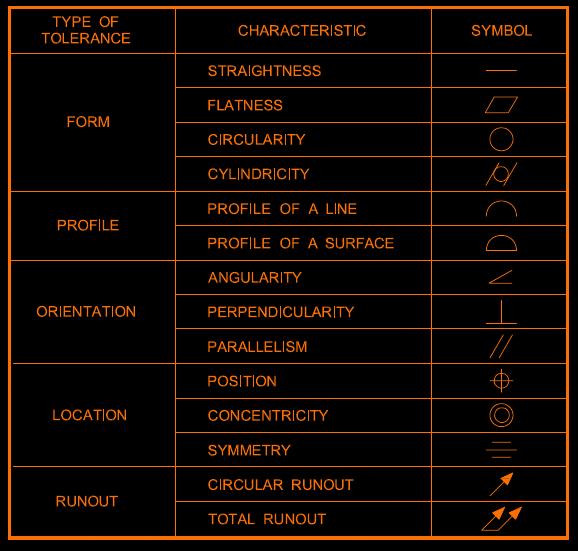
Aniq granitda nechta turdagi teshiklar mavjud?
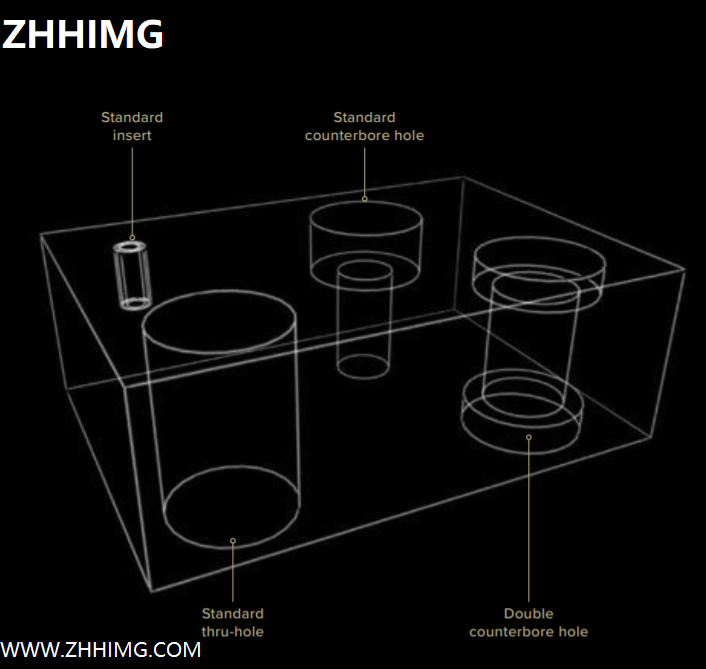
Precision Granit komponentlaridagi uyalar
Ko'pgina fabrikalar, tekshirish xonalari va laboratoriyalar uchun aniq o'lchovlar uchun asos sifatida aniq granit sirt plitalari tayaniladi. Har bir chiziqli o'lchov yakuniy o'lchamlar olinadigan aniq mos yozuvlar yuzasiga bog'liq bo'lgani uchun, sirt plitalari ishlov berishdan oldin ishlarni tekshirish va joylashtirish uchun eng yaxshi mos yozuvlar tekisligini ta'minlaydi. Ular, shuningdek, balandlik o'lchovlarini va o'lchov sirtlarini o'lchash uchun ideal asosdir. Bundan tashqari, yuqori darajadagi tekislik, barqarorlik, umumiy sifat va mahorat ularni murakkab mexanik, elektron va optik o'lchash tizimlarini o'rnatish uchun yaxshi tanlovga aylantiradi. Ushbu o'lchash jarayonlarining har biri uchun sirt plitalarini kalibrlangan holda saqlash juda muhimdir.
O'lchovlar va tekislikni takrorlang
Aniq sirtni ta'minlash uchun ham tekislik, ham takroriy o'lchovlar juda muhimdir. Tekislik deganda sirtdagi barcha nuqtalarning ikkita parallel tekislik, asos tekisligi va tom tekisligi ichida joylashganligi tushuniladi. Tekisliklar orasidagi masofani o'lchash sirtning umumiy tekisligi hisoblanadi. Bu tekislik o'lchovi odatda tolerantlikka ega va darajani belgilashni o'z ichiga olishi mumkin.
Uchta standart sinf uchun tekislik bardoshliligi federal spetsifikatsiyada quyidagi formula bilan aniqlanadi:
DIN standarti, GB standarti, ASME standarti, JJS standarti... turli mamlakatlarda turli stendlar mavjud...
Standart haqida batafsil ma'lumot.
Yassilikdan tashqari, takrorlanishni ta'minlash kerak. Takroriy o'lchov - bu mahalliy tekislik maydonlarini o'lchashdir. Bu plastinka yuzasining istalgan joyida olinadigan va belgilangan tolerantlik doirasida takrorlanadigan o'lchovdir. Mahalliy tekislikni umumiy tekislikdan ko'ra qattiqroq tolerantlik darajasiga nazorat qilish sirt tekislik profilining asta-sekin o'zgarishini kafolatlaydi va shu bilan mahalliy xatolarni minimallashtiradi.
Sirt plitasining ham tekislik, ham takroriy o'lchov talablariga javob berishini ta'minlash uchun granit sirt plitalari ishlab chiqaruvchilari o'z talablari uchun asos sifatida GGG-P-463c Federal Specification dan foydalanishlari kerak. Ushbu standart takroriy o'lchov aniqligi, sirt plitasi granitining material xususiyatlari, sirt qoplamasi, tayanch nuqtasining joylashuvi, qattiqligi, rezbali qo'shimchalarni tekshirishning maqbul usullari va o'rnatishni ko'rib chiqadi.
Plitaning aniqligini tekshirish
Bir nechta oddiy ko'rsatmalarga amal qilish orqali granit sirt plitasiga investitsiya ko'p yillarga yetishi kerak. Plitadan foydalanishga, ustaxona muhitiga va talab qilinadigan aniqlikka qarab, sirt plitasining aniqligini tekshirish chastotasi har xil bo'ladi. Umumiy qoida shundaki, yangi plita sotib olinganidan keyin bir yil ichida to'liq qayta kalibrlanishi kerak. Agar plita tez-tez ishlatilsa, bu vaqt oralig'ini olti oygacha qisqartirish tavsiya etiladi.
Sirt plitasi umumiy tekislik uchun belgilanganidan tashqarida eskirishidan oldin, u eskirgan yoki to'lqinli ustunlarni ko'rsatadi. Takroriy o'lchash o'lchagichidan foydalangan holda takroriy o'lchash xatolarini oylik tekshirish eskirish joylarini aniqlaydi. Takroriy o'lchash o'lchagichi - bu mahalliy xatoni aniqlaydigan va yuqori kattalashtirish elektron kuchaytirgichida ko'rsatilishi mumkin bo'lgan yuqori aniqlikdagi asbob.
Samarali tekshirish dasturi avtokollimator bilan muntazam tekshiruvlarni o'z ichiga olishi kerak, bu esa Milliy Standartlar va Texnologiyalar Instituti (NIST) tomonidan kuzatilishi mumkin bo'lgan umumiy tekislikni haqiqiy kalibrlashni ta'minlaydi. Vaqti-vaqti bilan ishlab chiqaruvchi yoki mustaqil kompaniya tomonidan keng qamrovli kalibrlash zarur.
Kalibrlashlar orasidagi o'zgarishlar
Ba'zi hollarda, sirt plitalarini kalibrlash o'rtasida farqlar mavjud. Ba'zan bu o'zgarishlarni aşınma natijasida yuzaga keladigan sirt o'zgarishi, tekshirish uskunalaridan noto'g'ri foydalanish yoki kalibrlanmagan uskunalardan foydalanish kabi omillar tushuntirishi mumkin. Biroq, eng keng tarqalgan ikkita omil harorat va qo'llab-quvvatlashdir.
Eng muhim o'zgaruvchilardan biri haroratdir. Masalan, sirt kalibrlashdan oldin issiq yoki sovuq eritma bilan yuvilgan va normalizatsiya qilish uchun yetarli vaqt berilmagan bo'lishi mumkin. Harorat o'zgarishining boshqa sabablari orasida sovuq yoki issiq havo shamollari, to'g'ridan-to'g'ri quyosh nuri, yuqoridan yorug'lik yoki plastinka yuzasida boshqa nurlanish issiqlik manbalari mavjud.
Qish va yoz o'rtasida vertikal harorat gradiyentida ham o'zgarishlar bo'lishi mumkin. Ba'zi hollarda, plastinka jo'natilgandan keyin normallashishi uchun yetarli vaqt berilmaydi. Kalibrlash amalga oshirilganda vertikal gradiyent haroratini qayd etish yaxshi fikr.
Kalibrlash o'zgarishining yana bir keng tarqalgan sababi bu noto'g'ri qo'llab-quvvatlanadigan plastinka. Sirt plitasi uchta nuqtada qo'llab-quvvatlanishi kerak, ideal holda plastinkaning uchlaridan uzunlikning 20% ichki qismida joylashgan bo'lishi kerak. Ikkita tayanch uzun tomonlaridan kenglikning 20% ichki qismida joylashgan bo'lishi kerak va qolgan tayanch markazda bo'lishi kerak.
Faqat uchta nuqta aniq sirtdan boshqa har qanday narsaga mustahkam tayanishi mumkin. Plitani uchdan ortiq nuqtada ushlab turishga urinish, plastinkaning turli xil uchta nuqta kombinatsiyalaridan tayanch olishiga olib keladi, bu esa ishlab chiqarish paytida qo'llab-quvvatlangan uchta nuqta bilan bir xil bo'lmaydi. Bu plastinka yangi tayanch tartibiga moslashish uchun og'ishi bilan xatolarga olib keladi. Tegishli tayanch nuqtalari bilan bir tekisda turish uchun mo'ljallangan tayanch nurlari bo'lgan po'lat tagliklardan foydalanishni ko'rib chiqing. Buning uchun tagliklar odatda sirt plitasi ishlab chiqaruvchisidan mavjud.
Agar plastinka to'g'ri qo'llab-quvvatlansa, aniq tekislash faqat dastur tomonidan belgilangan taqdirdagina zarur. To'g'ri qo'llab-quvvatlanadigan plastinkaning aniqligini saqlab qolish uchun tekislash shart emas.
Plitalarning ishlash muddatini uzaytiring
Bir nechta ko'rsatmalarga rioya qilish granit sirt plitasining aşınmasını kamaytiradi va oxir-oqibat uning ishlash muddatini uzaytiradi.
Birinchidan, plastinkani toza saqlash muhimdir. Havoda tarqaladigan abraziv chang odatda plastinkada eng katta aşınma va yirtilish manbai hisoblanadi, chunki u ish qismlariga va o'lchagichlarning aloqa yuzalariga singib ketishga moyil.
Shuningdek, plitalarni chang va shikastlanishdan himoya qilish uchun ularni yopish muhimdir. Ishlatilmaganda plastinkani yopish orqali aşınma muddatini uzaytirish mumkin.
Plastinkani vaqti-vaqti bilan aylantiring, shunda bitta joy ortiqcha ishlatilmaydi. Shuningdek, o'lchash moslamalaridagi po'lat kontakt prokladkalarini karbid prokladkalari bilan almashtirish tavsiya etiladi.
Ovqat yoki gazlangan ichimliklarni likopchaga qo'yishdan saqlaning. Ko'pgina gazlangan ichimliklar tarkibida uglerod yoki fosfor kislotasi mavjud bo'lib, ular yumshoq minerallarni eritib, yuzasida kichik chuqurchalar qoldirishi mumkin.
Qayerda takrorlash kerak
Granit sirt plitasini qayta qoplash kerak bo'lganda, ushbu xizmatni joyida yoki kalibrlash zavodida bajarishni ko'rib chiqing. Plitani zavodda yoki maxsus zavodda qayta qoplash har doim afzalroqdir. Biroq, agar plastinka juda yomon eskirmagan bo'lsa, odatda kerakli tolerantlikdan 0,001 dyuym ichida bo'lsa, uni joyida qayta qoplash mumkin. Agar plastinka tolerantlikdan 0,001 dyuymdan ortiq bo'lgan darajada eskirgan bo'lsa yoki u yomon chuqurchaga yoki tirnalishga uchragan bo'lsa, uni qayta qoplashdan oldin maydalash uchun zavodga yuborish kerak.
Kalibrlash zavodida plastinkalarni to'g'ri kalibrlash va kerak bo'lganda qayta ishlash uchun optimal sharoitlarni ta'minlaydigan uskunalar va zavod sozlamalari mavjud.
Joyida kalibrlash va qayta qoplama bo'yicha mutaxassisni tanlashda juda ehtiyot bo'lish kerak. Akkreditatsiya so'rang va texnik foydalanadigan uskunaning kuzatilishi mumkin bo'lgan kalibrlash xususiyatiga ega ekanligini tekshiring. Tajriba ham muhim omil hisoblanadi, chunki aniq granitni qanday qilib to'g'ri tekislashni o'rganish uchun ko'p yillar kerak bo'ladi.
Muhim o'lchovlar aniq granit sirt plitasidan asos sifatida boshlanadi. To'g'ri kalibrlangan sirt plitasidan foydalanib, ishonchli ma'lumotnomani ta'minlash orqali ishlab chiqaruvchilar ishonchli o'lchovlar va sifatli qismlar uchun muhim vositalardan biriga ega.Q
Kalibrlash o'zgarishlari uchun nazorat ro'yxati
1. Sirt kalibrlashdan oldin issiq yoki sovuq eritma bilan yuvilgan va normalizatsiya qilish uchun yetarli vaqt berilmagan.
2. Plastinka noto'g'ri qo'llab-quvvatlangan.
3. Harorat o'zgarishi.
4. Qoralamalar.
5. Plitaning yuzasiga to'g'ridan-to'g'ri quyosh nuri yoki boshqa issiqlik nurlari tushmasin. Yuqoridan tushadigan yorug'lik sirtni isitmasligiga ishonch hosil qiling.
6. Qish va yoz o'rtasidagi vertikal harorat gradientidagi o'zgarishlar. Iloji bo'lsa, kalibrlash amalga oshirilgan paytdagi vertikal gradient haroratini biling.
7. Plastinka jo'natilgandan keyin normallashishi uchun yetarli vaqt berilmagan.
8. Tekshirish uskunasidan noto'g'ri foydalanish yoki kalibrlanmagan uskunadan foydalanish.
9. Aşınma natijasida yuzaga keladigan sirt o'zgarishi.
Texnik maslahatlar
- Har bir chiziqli o'lchov yakuniy o'lchamlar olinadigan aniq mos yozuvlar yuzasiga bog'liq bo'lgani uchun, sirt plitalari ishlov berishdan oldin ishlarni tekshirish va joylashtirish uchun eng yaxshi mos yozuvlar tekisligini ta'minlaydi.
- Mahalliy tekislikni umumiy tekislikka qaraganda qattiqroq bardoshlik darajasida boshqarish sirt tekisligi profilining asta-sekin o'zgarishini kafolatlaydi va shu bilan mahalliy xatolarni minimallashtiradi.
- Samarali tekshirish dasturi avtokollimator bilan muntazam tekshiruvlarni o'z ichiga olishi kerak, bu esa Milliy inspeksiya organi tomonidan kuzatilishi mumkin bo'lgan umumiy tekislikni haqiqiy kalibrlashni ta'minlaydi.
Granitni tashkil etuvchi mineral zarrachalar orasida 90% dan ortig'i dala shpati va kvarts bo'lib, ulardan dala shpati eng ko'p uchraydi. Dala shpati ko'pincha oq, kulrang va qizil rangda bo'ladi va kvarts asosan rangsiz yoki kulrang oq rangda bo'lib, ular granitning asosiy rangini tashkil qiladi. Dala shpati va kvarts qattiq minerallar bo'lib, ularni po'lat pichoq bilan siljitish qiyin. Granitdagi qora dog'lar, asosan qora slyuda, boshqa ba'zi minerallar ham mavjud. Biotit nisbatan yumshoq bo'lsa-da, uning stressga qarshi turish qobiliyati zaif emas va shu bilan birga ularda granitning oz miqdori, ko'pincha 10% dan kam. Bu granit ayniqsa kuchli bo'lgan material holatidir.
Granitning mustahkamligining yana bir sababi shundaki, uning mineral zarralari bir-biriga mahkam bog'langan va bir-biriga singib ketgan. G'ovaklar ko'pincha tog 'jinsining umumiy hajmining 1% dan kamrog'ini tashkil qiladi. Bu granitga kuchli bosimga bardosh berish qobiliyatini beradi va namlik bilan osongina o'tib ketmaydi.
Granit komponentlari zanglamaydigan, kislota va ishqorga chidamli, yaxshi aşınmaya bardoshli va uzoq xizmat muddatiga ega toshdan yasalgan, maxsus parvarish talab etilmaydi. Granit aniqlik komponentlari asosan mashinasozlik sanoatida asbobsozlikda qo'llaniladi. Shuning uchun ular granit aniqlik komponentlari yoki granit komponentlari deb ataladi. Granit aniqlik komponentlarining xususiyatlari asosan granit platformalarinikiga o'xshash. Granit aniqlik komponentlarini asbobsozlik va o'lchashga kirish: Aniq ishlov berish va mikro ishlov berish texnologiyasi mashinasozlik sanoatining muhim rivojlanish yo'nalishlari bo'lib, ular yuqori texnologiyali darajani o'lchash uchun muhim ko'rsatkichga aylandi. Zamonaviy texnologiyalar va mudofaa sanoatining rivojlanishi aniq ishlov berish va mikro ishlov berish texnologiyasidan ajralmasdir. Granit komponentlari o'lchovda silliq siljiydi, turg'unliksiz. Ish yuzasini o'lchash, umumiy tirnalishlar o'lchov aniqligiga ta'sir qilmaydi. Granit komponentlari talab tomonining talablariga muvofiq ishlab chiqilishi va ishlab chiqarilishi kerak.
Qo'llash maydoni:
Barchamizga ma'lumki, tobora ko'proq mashina va uskunalar aniq granit komponentlarini tanlamoqda.
Granit komponentlari dinamik harakat, chiziqli motorlar, cmm, cnc, lazer mashinasi uchun ishlatiladi...
Qo'shimcha ma'lumot olish uchun biz bilan bog'lanishga xush kelibsiz.
Granit o'lchash moslamalari va granit mexanik komponentlari yuqori sifatli Jinan Black granitidan tayyorlangan. Yuqori aniqlik, uzoq umr, yaxshi barqarorlik va korroziyaga chidamliligi tufayli ular zamonaviy sanoat mahsulotlarini tekshirishda va mexanik aviatsiya va ilmiy tadqiqotlar kabi ilmiy sohalarda tobora ko'proq qo'llanila boshlandi.
Afzalliklari
----Chuyan temirdan ikki baravar qattiqroq;
----O'lchamdagi minimal o'zgarishlar harorat o'zgarishi bilan bog'liq;
----Siqilishdan xoli, shuning uchun ishda uzilish bo'lmaydi;
----Mayda donador tuzilish va ozgina yopishqoqlik tufayli burmalar yoki chiqib ketishlar yo'q, bu uzoq xizmat muddati davomida yuqori darajadagi tekislikni ta'minlaydi va boshqa qismlarga yoki asboblarga zarar yetkazmaydi;
---- Magnit materiallar bilan ishlash uchun muammosiz ishlash;
---- Uzoq umr va zanglamaydi, natijada texnik xizmat ko'rsatish xarajatlari past bo'ladi.
Aniq granit sirt plitalari aniqlikka erishish uchun yuqori tekislik standartiga qadar aniqlik bilan qoplangan va murakkab mexanik, elektron va optik o'lchash tizimlarini o'rnatish uchun asos sifatida ishlatiladi.
Granit sirt plitasining ba'zi o'ziga xos xususiyatlari:
Qattiqlikdagi bir xillik;
Yuk ostida aniq sharoitlar;
Vibratsiyani yutuvchi;
Tozalash oson;
O'rashga chidamli;
Past g'ovaklilik;
Aşındırıcı bo'lmagan;
Magnit bo'lmagan
Granit sirt plitasining afzalliklari
Birinchidan, uzoq vaqt davomida tabiiy qarishdan so'ng, jins bir xil tuzilishga ega, koeffitsient minimal, ichki stress butunlay yo'qoladi, deformatsiyalanmaydi, shuning uchun aniqlik yuqori.
Ikkinchidan, doimiy harorat sharoitida tirnalishlar bo'lmaydi, xona haroratida haroratni o'lchash aniqligini ham saqlab turish mumkin.
Uchinchidan, magnitlanish yo'q, o'lchov silliq harakatlanishi mumkin, g'ichirlash hissi yo'q, namlik ta'sir qilmaydi, tekislik mahkamlangan.
To'rtinchidan, qattiqlik yaxshi, qattiqlik yuqori, aşınma qarshilik kuchli.
Beshta, kislota va ishqoriy suyuqlik eroziyasidan qo'rqmaydi, zanglamaydi, yog'ga bo'yash shart emas, yopishqoq mikro changga oson yopishmaydi, parvarish qilish oson, parvarish qilish oson, uzoq xizmat muddati.
Nima uchun quyma temir mashina o'rniga granit asosni tanlash kerak?
1. Granit mashina tagligi quyma temir mashina tagligiga qaraganda yuqori aniqlikni saqlab turishi mumkin. Quyma temir mashina tagligi harorat va namlikka osonlikcha ta'sir qiladi, ammo granit mashina tagligi ta'sir qilmaydi;
2. Granit mashina asosi va quyma temir asosning bir xil o'lchamlari bilan granit mashina asosi quyma temirga qaraganda tejamkorroq;
3. Maxsus granit dastgoh tagligi quyma temir dastgoh tagligiga qaraganda osonroq ishlov beriladi.
Granit sirt plitalari butun mamlakat bo'ylab tekshirish laboratoriyalarida asosiy asboblar hisoblanadi. Sirt plastinkasining kalibrlangan, juda tekis yuzasi inspektorlarga ulardan qismlarni tekshirish va asboblarni kalibrlash uchun asos sifatida foydalanish imkonini beradi. Sirt plitalari tomonidan ta'minlangan barqarorliksiz, turli texnologik va tibbiyot sohalaridagi ko'plab qattiq bardoshli qismlarni to'g'ri ishlab chiqarish ancha qiyin, agar imkonsiz bo'lmasa ham, bo'lar edi. Albatta, boshqa materiallar va asboblarni kalibrlash va tekshirish uchun granit sirt blokidan foydalanish uchun granitning o'zi aniqligini baholash kerak. Foydalanuvchilar granit sirt plastinkasining aniqligini ta'minlash uchun uni kalibrlashlari mumkin.
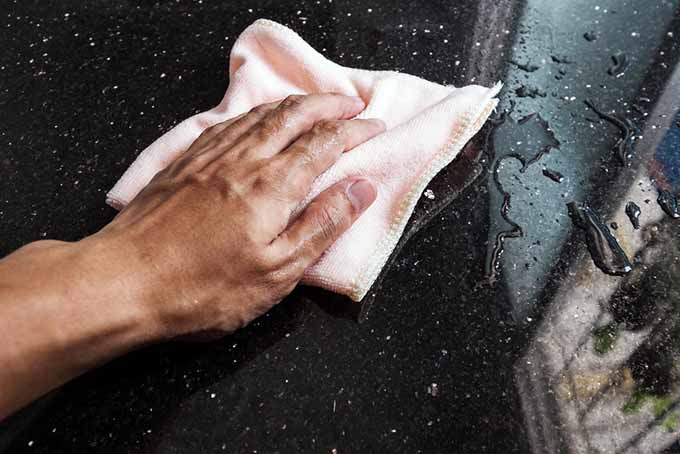
Granit sirt plitasini kalibrlashdan oldin tozalang. Toza, yumshoq matoga oz miqdorda sirt plitasi tozalagichini quying va granit yuzasini arting. Tozalagichni darhol sirt plitasidan quruq mato bilan arting. Tozalash suyuqligining havoda qurib qolishiga yo'l qo'ymang.
Granit sirt plitasining markaziga takroriy o'lchov o'lchagichini qo'ying.
Granit plitasining yuzasiga takroriy o'lchov o'lchagichini nolga tenglashtiring.
Granit yuzasi bo'ylab o'lchagichni asta-sekin harakatlantiring. O'lchagich indikatorini kuzatib boring va asbobni plastinka bo'ylab harakatlantirayotganda har qanday balandlik o'zgarishlarining cho'qqilarini yozib oling.
Plastinka yuzasidagi tekislik o'zgarishini sirt plitangiz uchun tolerantliklar bilan taqqoslang, bu plitalarning o'lchamiga va granitning tekislik darajasiga qarab o'zgaradi. Plastinkangiz o'lchami va darajasi bo'yicha tekislik talablariga javob berishini aniqlash uchun GGG-P-463c federal spetsifikatsiyasiga murojaat qiling (Resurslarga qarang). Plastinkadagi eng yuqori nuqta va plitadagi eng past nuqta o'rtasidagi farq uning tekislik o'lchovidir.
Plastinka yuzasidagi eng katta chuqurlik o'zgarishlari ushbu o'lcham va sinfdagi plastinka uchun takrorlanish talablariga mos kelishini tekshiring. Plastinkangiz o'z o'lchami uchun takrorlanish talablariga javob berishini aniqlash uchun GGG-P-463c federal spetsifikatsiyasiga murojaat qiling (Resurslarga qarang). Agar bitta nuqta ham takrorlanish talablariga javob bermasa, sirt plitasini rad eting.
Federal talablarga javob bermaydigan granit sirt plitasidan foydalanishni to'xtating. Plitani ishlab chiqaruvchiga yoki granit sirt qoplama kompaniyasiga qaytarib, blokni texnik xususiyatlarga muvofiq qayta sayqallang.
Maslahat
Yiliga kamida bir marta rasmiy kalibrlashni amalga oshiring, garchi ko'p ishlatiladigan granit sirt plitalari tez-tez kalibrlanishi kerak.
Ishlab chiqarish yoki tekshirish muhitida rasmiy, yozib olinadigan kalibrlash ko'pincha sifatni ta'minlash yoki tashqi kalibrlash xizmatlari sotuvchisi tomonidan amalga oshiriladi, garchi har kim foydalanishdan oldin sirt plitasini norasmiy tekshirish uchun takroriy o'lchov o'lchagichidan foydalanishi mumkin.
Granit sirt plitalarining dastlabki tarixi
Ikkinchi Jahon urushidan oldin ishlab chiqaruvchilar qismlarni o'lchovli tekshirish uchun po'lat sirt plitalaridan foydalanganlar. Ikkinchi Jahon urushi davrida po'latga ehtiyoj keskin oshdi va ko'plab po'lat sirt plitalari eritib yuborildi. Uni almashtirish kerak bo'ldi va granit o'zining yuqori metrologik xususiyatlari tufayli tanlangan materialga aylandi.
Granitning po'latdan bir qancha afzalliklari aniq bo'ldi. Granit qattiqroq, ammo mo'rtroq va parchalanishga moyil. Granitni po'latdan ancha tekisroq va tezroq surtish mumkin. Granit, shuningdek, po'latga nisbatan pastroq issiqlik kengayishi xususiyatiga ega. Bundan tashqari, agar po'lat plastinkani ta'mirlash kerak bo'lsa, uni mashinasozlik asboblarini qayta tiklashda ham o'z mahoratini qo'llagan hunarmandlar qo'lda qirib tashlashlari kerak edi.
Qo'shimcha eslatma sifatida, ba'zi po'lat sirt plitalari bugungi kunda ham qo'llanilmoqda.
Granit plitalarining metrologik xususiyatlari
Granit vulqon otilishi natijasida hosil bo'lgan magmatik tog 'jinsidir. Taqqoslash uchun, marmar metamorflangan ohaktoshdir. Metrologiyada foydalanish uchun tanlangan granit bundan buyon Fed Specs deb ataladigan GGG-P-463c Federal Specificationda va xususan, 3.1-qismda ko'rsatilgan maxsus talablarga javob berishi kerak. Fed Specs orasida granit mayda yoki o'rtacha donador tuzilishga ega bo'lishi kerak.
Granit qattiq materialdir, ammo uning qattiqligi bir necha sabablarga ko'ra farq qiladi. Tajribali granit plastinka mutaxassisi qattiqlikni uning rangi bo'yicha baholashi mumkin, bu uning kvarts tarkibini ko'rsatadi. Granitning qattiqligi qisman kvarts miqdori va slyuda yo'qligi bilan belgilanadigan xususiyatdir. Qizil va pushti granitlar eng qattiq, kulranglari o'rtacha qattiqlikda va qoralari eng yumshoq hisoblanadi.
Toshning qattiqligining egiluvchanligini yoki ko'rsatkichini ifodalash uchun Youngning elastiklik moduli ishlatiladi. Pushti granit shkala bo'yicha o'rtacha 3-5 ball, kulrang 5-7 ball va qora 7-10 ballni tashkil qiladi. Raqam qanchalik kichik bo'lsa, granit shunchalik qattiqroq bo'ladi. Raqam qanchalik katta bo'lsa, granit shunchalik yumshoq va egiluvchan bo'ladi. Bardoshlik darajalari uchun zarur bo'lgan qalinlikni va unga qo'yilgan qismlar va o'lchagichlarning og'irligini tanlashda granitning qattiqligini bilish muhimdir.
Qadimgi davrlarda, ko'ylak cho'ntaklaridagi trig stoli bukletlari bilan tanilgan haqiqiy mashinistlar bo'lgan davrda, qora granit "Eng yaxshisi" hisoblanar edi. Eng yaxshisi eng ko'p aşınmaya bardoshli yoki qattiqroq tur sifatida ta'riflangan. Bir kamchilik shundaki, qattiqroq granitlar osonroq yorilib yoki sinadi. Mashinistlar qora granit eng yaxshi ekanligiga shunchalik ishonishganki, ba'zi pushti granit ishlab chiqaruvchilari ularni qora rangga bo'yashgan.
Men shaxsan ombordan ko'chirilganda forkliftdan tushirib yuborilgan plastinkaga guvoh bo'lganman. Plitalar polga urilib, ikkiga bo'linib, haqiqiy pushti rangini ko'rsatdi. Xitoydan qora granit sotib olishni rejalashtirayotganda ehtiyot bo'ling. Pulingizni boshqa yo'l bilan sarflashingizni tavsiya qilamiz. Granit plastinkaning qattiqligi o'z-o'zidan farq qilishi mumkin. Kvarts chizig'i sirt plastinkasining qolgan qismiga qaraganda ancha qattiqroq bo'lishi mumkin. Qora gabbro qatlami joyni ancha yumshoq qilishi mumkin. Yaxshi o'qitilgan, tajribali sirt plastinkalarini ta'mirlash bo'yicha mutaxassislar bu yumshoq joylarni qanday boshqarishni bilishadi.
Sirt plitalari darajalari
Sirt plitalarining to'rtta darajasi mavjud. Laboratoriya darajasi AA va A, Xonani tekshirish darajasi B va to'rtinchisi - Ustaxona darajasi. AA va A darajalari AA darajasidagi plastinka uchun tekislikka bardoshliligi 0,00001 dyuymdan yuqori bo'lgan eng tekis hisoblanadi. Ustaxona darajalari eng kam tekis bo'lib, nomidan ko'rinib turibdiki, ular asboblar xonalarida foydalanish uchun mo'ljallangan. AA darajasi bo'lgan A va B darajalari tekshirish yoki sifat nazorati laboratoriyasida foydalanish uchun mo'ljallangan.
PSirt plitalarini kalibrlash uchun arqon sinovi
Men mijozlarimga har doim cherkovimdan har qanday 10 yoshli bolani olib chiqib, ularga bir necha kun ichida plastinkani qanday sinab ko'rishni o'rgatishim mumkinligini aytardim. Bu qiyin emas. Vazifani tezda bajarish uchun ma'lum texnika talab etiladi, bu texnikalar vaqt o'tishi bilan va ko'p takrorlash orqali o'rganiladi. Sizga shuni aytishim kerakki, Fed Spec GGG-P-463c kalibrlash protsedurasi EMAS! Bu haqda keyinroq batafsilroq.
Fed texnik xususiyatlariga ko'ra, umumiy tekislikni (o'rtacha oyna) va takrorlanishni (mahalliy aşınma) tekshirishni kalibrlash shart. Bunga yagona istisno - bu faqat takrorlanish talab qilinadigan kichik plitalar bilan bog'liq.
Shuningdek, va boshqa sinovlar kabi muhim bo'lgan narsa, termal gradientlar uchun sinovdir. (Quyidagi Delta T ga qarang)
1-rasm
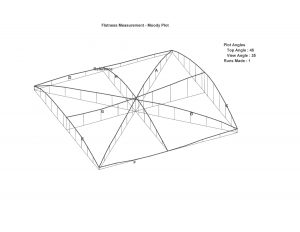
Yassilikni sinashning 4 ta tasdiqlangan usuli mavjud. Elektron darajalar, avtokollimatsiya, lazer va tekislik lokatori deb nomlanuvchi qurilma. Biz faqat elektron darajalardan foydalanamiz, chunki ular bir nechta sabablarga ko'ra eng aniq va eng tezkor usuldir.
Lazerlar va avtokollimatorlar juda to'g'ri yorug'lik nuridan ma'lumotnoma sifatida foydalanadilar. Granit sirt plitasining to'g'riligini o'lchash sirt plitasi va yorug'lik nuri orasidagi masofaning o'zgarishini taqqoslash orqali amalga oshiriladi. To'g'ri yorug'lik nurini olib, uni qaytaruvchi nishonga urib, qaytaruvchi nishonni sirt plitasi bo'ylab harakatlantirish orqali, chiqarilgan nur va qaytish nuri orasidagi masofa to'g'rilikni o'lchash hisoblanadi.
Bu usulning muammosi shundaki. Nishon va manba tebranish, atrof-muhit harorati, tekis yoki tirnalgan nishondan kamroq, havodagi ifloslanish va havo harakati (oqimlar) ta'sirida bo'ladi. Bularning barchasi xatoning qo'shimcha komponentlarini keltirib chiqaradi. Bundan tashqari, avtokollimator bilan tekshirishlardan operator xatosining hissasi kattaroq.
Tajribali avtokollimator foydalanuvchisi juda aniq o'lchovlarni amalga oshirishi mumkin, ammo aks ettirishlar kengayib yoki biroz xiralashganligi sababli, ayniqsa uzoq masofalarda o'qishlarning izchilligi bilan bog'liq muammolarga duch keladi. Bundan tashqari, mukammal tekis bo'lmagan nishon va linzadan uzoq vaqt davomida mo'ralash qo'shimcha xatolarga olib keladi.
Tekislikni aniqlash moslamasi shunchaki ahmoqona. Bu qurilma mos yozuvlar sifatida biroz to'g'ri (juda to'g'ri kollimatsiyalangan yoki lazer nuri bilan solishtirganda) dan foydalanadi. Mexanik qurilma nafaqat odatda atigi 20 u dyuymli aniqlikdagi indikatordan foydalanadi, balki chiziq va turli materiallarning notekisligi o'lchov xatolarini sezilarli darajada oshiradi. Bizning fikrimizcha, usul maqbul bo'lsa-da, hech bir malakali laboratoriya hech qachon tekislikni aniqlash moslamasidan yakuniy tekshirish vositasi sifatida foydalanmaydi.
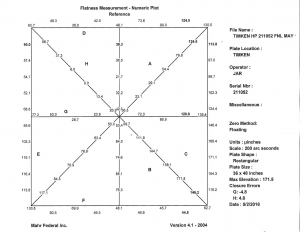
Elektron darajalar o'zlarining mos yozuvlar sifatida tortishish kuchidan foydalanadi. Differentsial elektron darajalarga tebranish ta'sir qilmaydi. Ularning aniqligi 0,1 yoy soniyasigacha past va o'lchovlar tez, aniq va tajribali operatorning xatoliklari juda kam. Na tekislik lokatorlari, na avtokollimatorlar sirtning kompyuter tomonidan yaratilgan topografik (1-rasm) yoki izometrik grafiklarini (2-rasm) taqdim etmaydi.
2-rasm
Sirtning to'g'ri tekisligi sinovi
Sirtning to'g'ri tekisligini tekshirish ushbu maqolaning juda muhim qismi bo'lib, men uni boshida joylashtirishim kerak edi. Avval aytib o'tilganidek, Fed Spec. GGG-p-463c kalibrlash usuli EMAS. Bu har qanday federal hukumat agentligi bo'lgan metrologiya sinfidagi granitning ko'plab jihatlari uchun qo'llanma bo'lib xizmat qiladi va bunga sinov usullari va tolerantliklar yoki darajalar kiradi. Agar pudratchi Fed Specsga rioya qilganligini da'vo qilsa, unda tekislik qiymati Moody usuli bilan aniqlanadi.
Mudi 50-yillarda umumiy tekislikni aniqlash va sinovdan o'tgan chiziqlarning yo'nalishini, ularning bir tekislikda yetarlicha yaqin joylashganligini hisobga olish uchun matematik usulni ishlab chiqqan yigit edi. Hech narsa o'zgarmadi. Allied Signal matematik usulni takomillashtirishga harakat qildi, ammo farqlar shunchalik kichikki, bunga arzimaydi degan xulosaga keldi.
Agar sirt plitasi pudratchisi elektron darajalar yoki lazerdan foydalansa, u hisoblashlarda unga yordam berish uchun kompyuterdan foydalanadi. Kompyuter yordamisiz avtokollimatsiyadan foydalanadigan texnik ko'rsatkichlarni qo'lda hisoblashi kerak. Aslida, ular bunday qilmaydi. Bu juda ko'p vaqt talab etadi va ochig'i, juda qiyin bo'lishi mumkin. Moody usuli yordamida tekislik sinovida texnik Union Jack konfiguratsiyasida sakkizta chiziqni tekislik uchun sinovdan o'tkazadi.
Moody usuli
Mudi usuli sakkizta chiziq bir tekislikda joylashganligini aniqlashning matematik usuli hisoblanadi. Aks holda, sizda shunchaki bir tekislikda yoki uning yonida joylashgan yoki bo'lmasligi mumkin bo'lgan 8 ta to'g'ri chiziq mavjud. Bundan tashqari, Fed Spec ga rioya qilishini da'vo qiluvchi va avtokollimatsiyadan foydalanadigan pudratchi, ukeraksakkiz sahifa ma'lumot yaratadi. Har bir satr uchun bitta sahifa tekshiriladi, bu uning sinovdan o'tkazganini, ta'mirlaganini yoki ikkalasini ham isbotlaydi. Aks holda, pudratchi haqiqiy tekislik qiymatini bilmaydi.
Ishonchim komilki, agar siz avtokollimatsiya yordamida pudratchi tomonidan plitalaringizni kalibrlaydiganlardan biri bo'lsangiz, siz bu sahifalarni hech qachon ko'rmagansiz! 3-rasm namunadirfaqat bittaUmumiy tekislikni hisoblash uchun sakkizinchi sahifa zarur. Bu johillik va yovuzlikning bir belgisi, agar sizning hisobotingizda chiroyli yumaloq raqamlar bo'lsa. Masalan, 200, 400, 650 va boshqalar. To'g'ri hisoblangan qiymat haqiqiy sondir. Masalan, 325.4 u In. Pudratchi hisoblashning Mudi usulidan foydalanganda va texnik qiymatlarni qo'lda hisoblaganda, siz sakkiz sahifali hisoblashlar va izometrik grafikni olishingiz kerak. Izometrik grafik turli chiziqlar bo'ylab turli balandliklarni va tanlangan kesishgan nuqtalarni qancha masofa ajratishini ko'rsatadi.
3-rasm(Yassilikni qo'lda hisoblash uchun shunga o'xshash sakkiz sahifa kerak bo'ladi. Agar pudratchingiz avtokollimatsiyadan foydalansa, nega buni olmaganingizni so'rashni unutmang!)
4-rasm
O'lchov o'lchagichlari bo'yicha mutaxassislar o'lchov stantsiyasidan stantsiyaga burchakdagi daqiqalik o'zgarishlarni o'lchash uchun afzal ko'rilgan asboblar sifatida differentsial darajalardan (4-rasm) foydalanadilar. Darajalar 0,1 yoy sekundigacha bo'lgan aniqlikka ega (4 dyuymli chanada 5 dyuym), ular juda barqaror, tebranish, o'lchangan masofalar, havo oqimlari, operator charchoqlari, havo ifloslanishi yoki boshqa qurilmalarga xos bo'lgan har qanday muammolar ta'sir qilmaydi. Kompyuter yordamini qo'shing, shunda vazifa nisbatan tezlashadi, topografik va izometrik grafiklar yaratiladi, bu esa tekshirishni va eng muhimi, ta'mirlashni tasdiqlaydi.
To'g'ri takrorlanuvchanlik testi
Takrorlash yoki takrorlanuvchanlik eng muhim sinovdir. Takrorlash qobiliyatini tekshirish uchun biz foydalanadigan uskunalar takrorlash o'qish moslamasi, LVDT va yuqori aniqlikdagi o'qishlar uchun zarur bo'lgan kuchaytirgichdir. Biz LVDT kuchaytirgichini minimal 10 u dyuym yoki yuqori aniqlikdagi plitalar uchun 5 u dyuym o'lchamiga o'rnatdik.
Agar siz 35 u dyuymli takrorlanuvchanlik talabini sinab ko'rmoqchi bo'lsangiz, atigi 20 u dyuymli aniqlikdagi mexanik indikatordan foydalanish befoyda. Ko'rsatkichlar 40 u dyuymli noaniqlikka ega! Takroriy o'qish sozlamalari balandlik o'lchagich/qism konfiguratsiyasini taqlid qiladi.
Takrorlanuvchanlik umumiy tekislik bilan bir xil emas (o'rtacha tekislik). Men granitda takrorlanuvchanlikni izchil radius o'lchovi sifatida ko'rib chiqishni yoqtiraman.
5-rasm
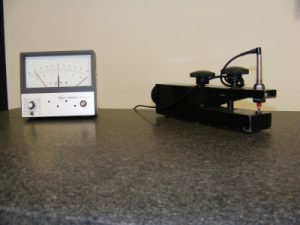
Agar siz yumaloq sharning takrorlanishini sinab ko'rsangiz, unda siz sharning radiusi o'zgarmaganligini ko'rsatdingiz. (To'g'ri ta'mirlangan plastinkaning ideal profili qavariq toj shakliga ega.) Biroq, sharning tekis emasligi aniq. Xo'sh, xuddi shunday. Juda qisqa masofada u tekis. Tekshirish ishlarining aksariyati qismga juda yaqin balandlik o'lchagichini o'z ichiga olganligi sababli, takrorlanish granit plastinkaning eng muhim xususiyatiga aylanadi. Agar foydalanuvchi uzun qismning tekisligini tekshirmasa, umumiy tekislik muhimroqdir.
Pudratchingiz takroriy o'qish sinovini o'tkazishiga ishonch hosil qiling. Plastinka bardoshlilikdan sezilarli darajada takroriy o'qishga ega bo'lishi mumkin, ammo baribir tekislik sinovidan o'tishi mumkin! Ajablanarlisi shundaki, laboratoriya takroriy o'qish sinovini o'z ichiga olmaydigan sinovlarda akkreditatsiyadan o'tishi mumkin. Ta'mirlay olmaydigan yoki ta'mirlashda unchalik yaxshi bo'lmagan laboratoriya faqat tekislik sinovini o'tkazishni afzal ko'radi. Plastinkani siljitmaguningizcha tekislik kamdan-kam hollarda o'zgaradi.
Takroriy o'qish sinovini o'tkazish eng oson, ammo uni tekislashda bajarish eng qiyin. Pudratchingiz sirtni "buzmasdan" yoki to'lqinlar qoldirmasdan takrorlanuvchanlikni tiklay olishiga ishonch hosil qiling.
Delta T sinovi
Ushbu sinov toshning yuqori va pastki yuzalarida HAQIQIY haroratini o'lchashni va sertifikatda hisobot berish uchun farqni, Delta T ni hisoblashni o'z ichiga oladi.
Granitdagi o'rtacha issiqlik kengayish koeffitsienti 3,5 uIn/dyuym/daraja ekanligini bilish muhimdir. Atrof-muhit harorati va namlikning granit plastinkaga ta'siri ahamiyatsiz. Biroq, sirt plastinkasi bardoshlik chegarasidan chiqib ketishi yoki ba'zan 0,3 – 0,5 daraja F Delta T da yaxshilanishi mumkin. Delta T oxirgi kalibrlashdan farqli bo'lgan 0,12 daraja F ichida ekanligini bilish kerak.
Shuningdek, plitalarning ish yuzasi issiqlikka qarab siljishini bilish muhimdir. Agar yuqori harorat pastki qismdan iliqroq bo'lsa, u holda yuqori sirt ko'tariladi. Agar pastki qismi iliqroq bo'lsa, bu kamdan-kam hollarda bo'ladi, u holda yuqori sirt cho'kadi. Sifat menejeri yoki texnik uchun plastinkaning tekis va kalibrlash yoki ta'mirlash vaqtida takrorlanishi mumkinligi yetarli emas, balki oxirgi kalibrlash sinovi paytida Delta T qanday bo'lganligi haqida bilish kifoya. Kritik vaziyatlarda foydalanuvchi Delta T ni o'zi o'lchash orqali plastinka faqat Delta T o'zgarishlari tufayli bardoshlik chegarasidan chiqib ketganligini aniqlashi mumkin. Yaxshiyamki, granit atrof-muhitga moslashish uchun ko'p soat yoki hatto kunlar talab qiladi. Kun davomida atrof-muhit haroratidagi kichik tebranishlar unga ta'sir qilmaydi. Shu sabablarga ko'ra, biz atrof-muhit kalibrlash harorati yoki namligi haqida xabar bermaymiz, chunki ta'sirlar ahamiyatsiz.
Granit plitalarining aşınması
Granit po'lat plitalardan qattiqroq bo'lsa-da, granit yuzasida hali ham past dog'lar hosil qiladi. Sirt plastinkasida qismlar va o'lchagichlarning takroriy harakatlanishi, ayniqsa, bir xil joy doimiy ravishda ishlatilsa, aşınmanın eng katta manbaidir. Plastinka yuzasida qolishiga yo'l qo'yilgan axloqsizlik va maydalash changi qismlar yoki o'lchagichlar va granit yuzasi o'rtasida o'tib, aşınma jarayonini tezlashtiradi. Qismlar va o'lchagichlarni uning yuzasi bo'ylab harakatlantirganda, odatda abraziv chang qo'shimcha aşınmaya sabab bo'ladi. Aşınmayı kamaytirish uchun doimiy tozalashni tavsiya qilaman. Biz plitalarning ustiga qo'yilgan kundalik UPS paketlari tufayli aşınmaya duchor bo'lganini ko'rdik! Mahalliy aşınma joylari kalibrlashning takrorlanish sinov ko'rsatkichlariga ta'sir qiladi. Muntazam tozalash orqali aşınmanın oldini oling.
Granit plitalarini tozalash
Plastinkani toza saqlash uchun qumni tozalash uchun matodan foydalaning. Yelim qoldiqlarini qoldirmaslik uchun juda yengil bosing. Yaxshi ishlatilgan mato tozalash oralig'ida changni yig'ishda juda yaxshi ishlaydi. Bir joyda ishlamang. Asbobingizni plastinka bo'ylab harakatlantiring, aşınma miqdorini taqsimlang. Plastinkani tozalash uchun spirtli ichimlikdan foydalanish mumkin, lekin buni amalga oshirish vaqtincha sirtni juda sovutib yuborishini yodda tuting. Oz miqdordagi sovun qo'shilgan suv juda yaxshi. Starrett's tozalagichi kabi tijoratda mavjud bo'lgan tozalagichlardan ham foydalanish juda yaxshi, lekin sovun qoldiqlarini sirtdan olib tashlashingizga ishonch hosil qiling.
Granit plitalarini ta'mirlash
Sirt plitasi pudratchisi malakali kalibrlashni amalga oshirishi muhimligi hozirdanoq ayon bo'lishi kerak. "Hammasini bitta qo'ng'iroq bilan bajaring" dasturlarini taklif qiluvchi "Kliring uyi" tipidagi laboratoriyalarda kamdan-kam hollarda ta'mirlash ishlarini bajara oladigan texnik mutaxassis bo'ladi. Agar ular ta'mirlash ishlarini taklif qilsalar ham, sirt plitasi sezilarli darajada bardoshli bo'lmagan hollarda har doim ham kerakli tajribaga ega texnik mutaxassisga ega bo'lavermaydi.
Agar plastinka haddan tashqari aşınma tufayli ta'mirlab bo'lmasligi aytilsa, bizga qo'ng'iroq qiling. Ehtimol, biz ta'mirlashni amalga oshira olamiz.
Bizning texniklarimiz bir yildan bir yarim yilgacha usta sirt plitalari bo'yicha texnik rahbarligida shogirdlikda ishlaydi. Biz usta sirt plitalari bo'yicha texnikni shogirdlikdan o'tgan va sirt plitalarini kalibrlash va ta'mirlash bo'yicha qo'shimcha o'n yildan ortiq tajribaga ega bo'lgan shaxs sifatida belgilaymiz. Bizning Dimensional Gauge kompaniyamizda jami 60 yildan ortiq tajribaga ega uchta usta texnik mavjud. Bizning usta texniklarimizdan biri qiyin vaziyatlar yuzaga kelganda har doim yordam va yo'l-yo'riq ko'rsatish uchun mavjud. Bizning barcha texniklarimiz kichikdan juda kattagacha bo'lgan barcha o'lchamdagi sirt plitalarini kalibrlash, turli xil atrof-muhit sharoitlari, turli sohalar va katta aşınma muammolari bo'yicha tajribaga ega.
Fed Specs uchun o'rtacha arifmetik qo'pollik (AA) 16 dan 64 gacha bo'lgan aniq pardozlash talabi mavjud. Biz 30-35 AA oralig'idagi pardozlashni afzal ko'ramiz. Qismlar va o'lchagichlarning silliq harakatlanishini va sirt plastinkasiga yopishib qolmasligini yoki siqilib ketmasligini ta'minlash uchun yetarli qo'pollik mavjud.
Ta'mirlashda biz plastinkaning to'g'ri o'rnatilishi va tekisligini tekshiramiz. Biz quruq tekkizish usulidan foydalanamiz, lekin granitni jiddiy olib tashlashni talab qiladigan o'ta aşınma holatlarida biz tekkizishni namlaymiz. Bizning mutaxassislarimiz o'zlaridan keyin tozalashadi, ular puxta, tezkor va aniq ishlaydi. Bu muhim, chunki granit plastinka xizmati narxi sizning ishlamay qolish vaqtingiz va yo'qotilgan ishlab chiqarishni o'z ichiga oladi. Malakali ta'mirlash juda muhim va siz hech qachon pudratchini narx yoki qulaylik bo'yicha tanlamasligingiz kerak. Ba'zi kalibrlash ishlari yuqori malakali mutaxassislarni talab qiladi. Bizda shunday imkoniyat bor.
Yakuniy kalibrlash hisobotlari
Har bir sirt plitasini ta'mirlash va kalibrlash uchun biz batafsil professional hisobotlarni taqdim etamiz. Bizning hisobotlarimizda ham muhim, ham tegishli ma'lumotlarning katta miqdori mavjud. Fed Spec. biz taqdim etgan ma'lumotlarning aksariyatini talab qiladi. ISO/IEC-17025 kabi boshqa sifat standartlarida mavjud bo'lganlar bundan mustasno, minimal Fed. Hisobotlar uchun texnik xususiyatlar:
- Hajmi (futda) (X' x X')
- Rang
- Uslub (qisqichli qirralar yoki ikkita yoki to'rtta qirralarni nazarda tutadi)
- Elastiklikning taxminiy moduli
- O'rtacha tekislik bardoshliligi (darajasi/o'lchami bo'yicha aniqlanadi)
- Takroriy o'qish Bardoshlik (diagonal uzunligi dyuymlarda aniqlanadi)
- Topilgan o'rtacha tekislik
- Chapdagi o'rtacha tekislik
- Topilganidek o'qishni takrorlang
- Chapdagi kabi o'qishni takrorlang
- Delta T (Yuqori va pastki yuzalar orasidagi harorat farqi)
Agar texnik sirt plitasini tekislash yoki ta'mirlash ishlarini bajarishi kerak bo'lsa, unda kalibrlash sertifikatiga ta'mirlashning haqiqiyligini isbotlash uchun topografik yoki izometrik grafik ilova qilinadi.
ISO/IEC-17025 akkreditatsiyalari va ularga ega laboratoriyalar haqida qisqacha ma'lumot
Laboratoriya sirt plitalarini kalibrlash bo'yicha akkreditatsiyaga ega bo'lishi, ular nima qilayotganlarini bilishlarini, hatto uni to'g'ri bajarishlarini ham anglatmaydi! Bu laboratoriya ta'mirlashi mumkinligini ham anglatmaydi. Akkreditatsiya qiluvchi organlar tekshirish yoki kalibrlash (ta'mirlash) o'rtasida farq qilmaydi.Ava men bittasini bilaman, ehtimol2akkreditatsiya qiluvchi organlarLgalstukAAgar ularga yetarlicha pul to'lagan bo'lsam, itimga lenta bog'lab qo'yishadi! Bu achinarli fakt. Men laboratoriyalarning talab qilinadigan uchta testdan faqat bittasini o'tkazish orqali akkreditatsiya olganini ko'rganman. Bundan tashqari, men laboratoriyalarning real bo'lmagan noaniqliklar bilan akkreditatsiya olganini va qiymatlarni qanday hisoblaganliklarini hech qanday dalil yoki ko'rsatmasiz akkreditatsiya olganini ko'rganman. Bularning barchasi achinarli.
Xulosa
Aniq granit plitalarining rolini kam baholab bo'lmaydi. Granit plitalari taqdim etadigan tekislik boshqa barcha o'lchovlarni amalga oshirish uchun asosdir.
Siz eng zamonaviy, eng aniq va eng ko'p qirrali o'lchash asboblaridan foydalanishingiz mumkin. Biroq, agar mos yozuvlar yuzasi tekis bo'lmasa, aniq o'lchovlarni aniqlash qiyin. Bir safar, potentsial mijoz menga: "Bu shunchaki tosh!", dedi. Mening javobim: "Xo'sh, siz haqsiz va siz sirt plitalaringizni ta'mirlash uchun mutaxassislarning kelishini oqlay olmaysiz".
Narx hech qachon sirt plitalari pudratchilarini tanlash uchun yaxshi sabab emas. Xaridorlar, buxgalterlar va ko'plab sifatli muhandislar har doim ham granit plitalarini qayta sertifikatlash mikrometr, kaliper yoki DMMni qayta sertifikatlash kabi emasligini tushunishmaydi.
Ba'zi asboblar arzon narx emas, balki tajriba talab qiladi. Shuni aytish kerakki, bizning narxlarimiz juda o'rinli. Ayniqsa, ishni to'g'ri bajarishimizga ishonchimiz komil bo'lgani uchun. Biz qo'shimcha qiymat jihatidan ISO-17025 va Federal texnik shartlar talablaridan ancha ustunmiz.
Sirt plitalari ko'plab o'lchovli o'lchovlar uchun asos bo'lib xizmat qiladi va o'lchov aniqligini ta'minlash uchun sirt plastinkangizga to'g'ri g'amxo'rlik qilish zarur.
Granit sirt qattiqligi va harorat o'zgarishiga past sezgirlik kabi ideal jismoniy xususiyatlari tufayli sirt plitalari uchun ishlatiladigan eng mashhur materialdir. Biroq, doimiy foydalanish bilan sirt plitalari aşınmaya uchraydi.
Plastinka aniq o'lchovlarni olish uchun aniq sirtni ta'minlaydimi yoki yo'qligini aniqlash uchun tekislik va takrorlanish qobiliyati muhim jihatlardir. Ikkala jihat uchun ham tolerantliklar GGG-P-463C, DIN, GB, JJS Federal Spetsifikatsiyasi bo'yicha belgilangan... Tekislik - bu plitadagi eng yuqori nuqta (tom tekisligi) va eng past nuqta (asosiy tekislik) orasidagi masofani o'lchashdir. Takrorlanish qobiliyati bir sohadan olingan o'lchovni butun plita bo'ylab belgilangan tolerantlik doirasida takrorlash mumkinligini aniqlaydi. Bu plitada cho'qqilar yoki vodiylar yo'qligini ta'minlaydi. Agar o'qishlar belgilangan ko'rsatmalar doirasida bo'lmasa, o'lchovlarni spetsifikatsiyaga qaytarish uchun qayta qoplama talab qilinishi mumkin.
Vaqt o'tishi bilan tekislik va takroriylikni ta'minlash uchun sirt plitasini muntazam kalibrlash zarur. Cross kompaniyasining aniqlik o'lchov guruhi sirt plitasining tekisligi va takroriyligini kalibrlash uchun ISO 17025 akkreditatsiyasiga ega. Biz Mahr sirt plitasini sertifikatlash tizimidan foydalanamiz, bu quyidagilarni o'z ichiga oladi:
- Moody va profil tahlili,
- Izometrik yoki raqamli grafiklar,
- Ko'p yugurish o'rtacha ko'rsatkichi va
- Sanoat standartlariga muvofiq avtomatik baholash.
Mahr kompyuter yordamidagi modeli mutlaq darajadan har qanday burchak yoki chiziqli og'ishni aniqlaydi va sirt plitalarini yuqori aniqlikda profillash uchun idealdir.
Kalibrlashlar orasidagi intervallar foydalanish chastotasiga, plastinka joylashgan atrof-muhit sharoitlariga va kompaniyangizning o'ziga xos sifat talablariga qarab o'zgaradi. Sirt plastinkangizni to'g'ri saqlash har bir kalibrlash orasidagi intervallarni uzoqroq saqlashga imkon beradi, qayta qoplashning qo'shimcha xarajatlaridan qochishga yordam beradi va eng muhimi, plastinkada olgan o'lchovlaringiz iloji boricha aniq bo'lishini ta'minlaydi. Sirt plitalari mustahkam ko'rinsa-da, ular aniq asboblardir va ularga shunday munosabatda bo'lish kerak. Sirt plitalaringizga g'amxo'rlik qilishda e'tiborga olish kerak bo'lgan ba'zi narsalar:
- Plitani toza tuting va iloji bo'lsa, ishlatilmaganda uni yoping
- Plitaga o'lchov asboblari yoki o'lchash uchun mo'ljallangan qismlardan boshqa hech narsa qo'yilmasligi kerak.
- Har safar plastinkada bir xil joydan foydalanmang.
- Iloji bo'lsa, plastinkani vaqti-vaqti bilan aylantiring.
- Plastinkangizning yuk chegarasiga rioya qiling
Nozik granit asosi dastgoh asboblarining ishlashini yaxshilashi mumkin
Umuman olganda, mashinasozlikda va xususan, stanoksozlikda talablar doimiy ravishda oshib bormoqda. Xarajatlarni oshirmasdan maksimal aniqlik va ishlash ko'rsatkichlariga erishish raqobatbardosh bo'lishning doimiy qiyinchiliklari hisoblanadi. Bu yerda stanok poydevori hal qiluvchi omil hisoblanadi. Shuning uchun tobora ko'proq stanok ishlab chiqaruvchilari granitga tayanmoqdalar. Fizik parametrlari tufayli u po'lat yoki polimer beton bilan erishib bo'lmaydigan aniq afzalliklarni taqdim etadi.
Granit vulqon chuqurligidagi togʻ jinsi deb ataladi va juda zich va bir hil tuzilishga ega boʻlib, juda past kengayish koeffitsienti, past issiqlik oʻtkazuvchanligi va yuqori tebranish suspenziyasi bilan ajralib turadi.
Quyida granit asosan faqat yuqori darajadagi koordinata o'lchash mashinalari uchun asos sifatida mos keladi degan keng tarqalgan fikr nima uchun allaqachon eskirganligini va nima uchun bu tabiiy material dastgoh asosi sifatida yuqori aniqlikdagi dastgohlar uchun ham po'lat yoki quyma temirga juda foydali alternativ ekanligini bilib olasiz.
Biz dinamik harakat uchun granit komponentlarini, chiziqli motorlar uchun granit komponentlarini, ndt uchun granit komponentlarini, rentgen uchun granit komponentlarini, cmm uchun granit komponentlarini, cnc uchun granit komponentlarini, lazer uchun granit aniqligini, aerokosmik uchun granit komponentlarini, aniqlik bosqichlari uchun granit komponentlarini ishlab chiqarishimiz mumkin...
Qo'shimcha xarajatlarsiz yuqori qo'shilgan qiymat
Mashinasozlikda granitdan foydalanishning ortib borishi po'lat narxining keskin oshishi bilan bog'liq emas. Aksincha, bu granitdan yasalgan dastgoh platformasi yordamida qo'shimcha qiymatga erishish juda kam yoki umuman qo'shimcha xarajatlarsiz amalga oshirilishi bilan bog'liq. Bu Germaniya va Yevropadagi taniqli dastgoh ishlab chiqaruvchilarining narxlarni taqqoslashlari bilan tasdiqlangan.
Granit yordamida termodinamik barqarorlik, tebranishlarni pasaytirish va uzoq muddatli aniqlikdagi sezilarli o'sishga quyma temir yoki po'lat konstruksiya yordamida yoki faqat nisbatan yuqori narxda erishish mumkin emas. Masalan, termal xatolar mashinaning umumiy xatosining 75% gacha bo'lishi mumkin, ko'pincha dasturiy ta'minot orqali kompensatsiya qilishga urinishlar o'rtacha muvaffaqiyat bilan amalga oshiriladi. Past issiqlik o'tkazuvchanligi tufayli granit uzoq muddatli aniqlik uchun yaxshiroq asos hisoblanadi.
1 mkm bardoshlik bilan granit DIN 876 ga muvofiq 00 aniqlik darajasi uchun yassilik talablariga osongina javob beradi. 1 dan 10 gacha bo'lgan qattiqlik shkalasida 6 qiymatiga ega bo'lgan holda, u juda qattiq va 2,8 g/sm³ solishtirma og'irligi bilan deyarli alyuminiy qiymatiga etadi. Bu shuningdek, kesish dastgohlari uchun yuqori uzatish tezligi, yuqori o'q tezlanishlari va asbobning ishlash muddatini uzaytirish kabi qo'shimcha afzalliklarga olib keladi. Shunday qilib, quyma konstruksiyadan granit konstruksiyaga o'tish ushbu dastgohni aniqlik va ishlash jihatidan yuqori sinfga o'tkazadi - qo'shimcha xarajatlarsiz.
Granitning yaxshilangan ekologik izi
Po'lat yoki quyma temir kabi materiallardan farqli o'laroq, tabiiy toshni ko'p energiya sarflab va qo'shimchalar yordamida ishlab chiqarish shart emas. Karer qazish va sirtni qayta ishlash uchun nisbatan oz miqdordagi energiya talab qilinadi. Bu esa yuqori ekologik iz qoldiradi, bu hatto mashinaning ishlash muddati tugaganida ham material sifatida po'latdan ustun turadi. Granit qatlami yangi mashina uchun asos bo'lishi yoki yo'l qurilishi uchun maydalash kabi butunlay boshqa maqsadlarda ishlatilishi mumkin.
Granit uchun resurslar yetishmaydi. Bu yer qobig'idagi magmadan hosil bo'lgan chuqur tog 'jinsidir. U millionlab yillar davomida "pishib yetilgan" va deyarli barcha qit'alarda, jumladan, butun Yevropada tabiiy resurs sifatida juda ko'p miqdorda mavjud.
Xulosa: Granitning po'lat yoki quyma temirga nisbatan ko'plab ko'rinadigan afzalliklari mexanik muhandislarning ushbu tabiiy materialdan yuqori aniqlikdagi, yuqori samarali dastgohlar uchun asos sifatida foydalanishga bo'lgan ishtiyoqining ortib borayotganini oqlaydi. Dastgohlar va mashinasozlik uchun foydali bo'lgan granit xususiyatlari haqida batafsil ma'lumotni ushbu keyingi maqolada topishingiz mumkin.
Takroriy o'lchov - bu mahalliy tekislik maydonlarini o'lchashdir. Takroriy o'lchov spetsifikatsiyasida plastinka yuzasining istalgan joyida o'tkazilgan o'lchov belgilangan tolerantlik doirasida takrorlanishi aytilgan. Mahalliy tekislikni umumiy tekislikdan qattiqroq nazorat qilish sirt tekislik profilining asta-sekin o'zgarishini kafolatlaydi va shu bilan mahalliy xatolarni minimallashtiradi.
Ko'pgina ishlab chiqaruvchilar, jumladan, import qilingan brendlar, umumiy tekislik bardoshliligi bo'yicha Federal spetsifikatsiyaga amal qilishadi, ammo ko'pchilik takroriy o'lchovlarni e'tiborsiz qoldiradi. Bugungi kunda bozorda mavjud bo'lgan arzon yoki byudjetli plitalarning aksariyati takroriy o'lchovlarni kafolatlamaydi. Takroriy o'lchovlarni kafolatlamaydigan ishlab chiqaruvchi ASME B89.3.7-2013 yoki Federal spetsifikatsiya GGG-P-463c yoki DIN 876, GB, JJS talablariga javob beradigan plitalarni ishlab chiqarmayapti...
Ikkalasi ham aniq o'lchovlar uchun aniq sirtni ta'minlash uchun juda muhimdir. O'lchov aniqligini kafolatlash uchun faqat tekislik spetsifikatsiyasi yetarli emas. Misol tariqasida, FAQAT .000300" tekislik spetsifikatsiyasiga javob beradigan 36 X 48 A inspeksiya darajasidagi sirt plitasini olaylik. Agar tekshirilayotgan buyum bir nechta cho'qqilarni kesib o'tsa va ishlatilayotgan o'lchagich past nuqtada bo'lsa, o'lchov xatosi bitta sohada to'liq tolerantlik, 000300" bo'lishi mumkin! Aslida, agar o'lchagich qiyalikning qiyalik qismida joylashgan bo'lsa, u ancha yuqori bo'lishi mumkin.
Nishabning og'irligiga va ishlatilayotgan o'lchagichning uzunligiga qarab, .000600"-.000800" xatoliklar bo'lishi mumkin. Agar ushbu plastinkada .000050"FIR takroriy o'lchov spetsifikatsiyasi bo'lsa, o'lchov plastinkaning qayerda o'tkazilishidan qat'i nazar, o'lchov xatosi .000050" dan kam bo'ladi. Odatda o'qimagan texnik plastinkani joyida qayta qoplashga harakat qilganda yuzaga keladigan yana bir muammo, plastinkani sertifikatlash uchun faqat takroriy o'lchovlardan foydalanishdir.
Takrorlanishni tekshirish uchun ishlatiladigan asboblar umumiy tekislikni tekshirish uchun mo'ljallanmagan. Mukammal egri sirtda nolga o'rnatilganda, ular nolni o'qishda davom etadi, bu sirt mukammal tekismi yoki mukammal botiqmi yoki qavariqmi 1/2" bo'lishidan qat'i nazar! Ular shunchaki sirtning bir xilligini tekshiradi, tekislikni emas. Faqat tekislik spetsifikatsiyasiga VA takroriy o'lchash spetsifikatsiyasiga javob beradigan plastinka ASME B89.3.7-2013 yoki GGG-P-463c Federal spetsifikatsiyasi talablariga haqiqatan ham javob beradi.
Ask us about or flatness specification and repeat measurement promise by calling +86 19969991659 or emailing INFO@ZHHIMG.COM
Ha, lekin ular faqat ma'lum bir vertikal harorat gradiyenti uchun kafolatlanishi mumkin. Agar gradiyentda o'zgarish bo'lsa, plastinkaga issiqlik kengayishining ta'siri osongina tolerantlikdan kattaroq aniqlik o'zgarishiga olib kelishi mumkin. Ba'zi hollarda, agar tolerantlik yetarlicha qattiq bo'lsa, yuqoridan yoritiladigan yorug'likdan yutilgan issiqlik bir necha soat ichida gradiyentning yetarlicha o'zgarishiga olib kelishi mumkin.
Granitning issiqlik kengayish koeffitsienti 1°F uchun dyuymga taxminan 0,0000035 dyuymni tashkil qiladi. Misol tariqasida: 36" x 48" x 8" o'lchamdagi sirt plitasi 0°F qiyalikda 0,000075" (AA darajasining 1/2 qismi) aniqlikka ega, yuqori va pastki harorat bir xil. Agar plitaning yuqori qismi pastki qismdan 1°F iliqroq bo'ladigan darajada qizisa, aniqlik 0,000275" qavariqgacha o'zgaradi! Shuning uchun, laboratoriya darajasidagi AA dan qattiqroq bardoshlik koeffitsientiga ega plitani buyurtma qilish faqat etarli iqlim nazorati mavjud bo'lgandagina ko'rib chiqilishi kerak.
Sirt plitasi 3 nuqtadan, ideal holda plitaning chetidan uzunlikning 20% ichki masofada joylashgan bo'lishi kerak. Ikkita tayanch uzun tomonlaridan kenglikning 20% ichki masofada joylashgan bo'lishi kerak va qolgan tayanch markazda bo'lishi kerak. Faqat 3 nuqta aniq sirtdan boshqa har qanday narsaga mustahkam turishi mumkin.
Ishlab chiqarish jarayonida plastinka ushbu nuqtalarda qo'llab-quvvatlanishi kerak va foydalanish paytida u faqat shu uchta nuqtada qo'llab-quvvatlanishi kerak. Plitani uchdan ortiq nuqtada qo'llab-quvvatlashga urinish plastinkaning turli xil uchta nuqta kombinatsiyalaridan qo'llab-quvvatlashini olishiga olib keladi, bu esa ishlab chiqarish jarayonida qo'llab-quvvatlangan 3 nuqta bilan bir xil bo'lmaydi. Bu plastinka yangi qo'llab-quvvatlash tartibiga moslashish uchun og'ishi bilan xatolarga olib keladi. Barcha zhhimg po'lat ustunlarida tegishli qo'llab-quvvatlash nuqtalari bilan bir tekisda turish uchun mo'ljallangan qo'llab-quvvatlash nurlari mavjud.
Agar plastinka to'g'ri qo'llab-quvvatlansa, aniq tekislash faqat sizning qo'llanishingiz talab qilganda kerak bo'ladi. To'g'ri qo'llab-quvvatlanadigan plastinkaning aniqligini saqlab qolish uchun tekislash shart emas.
Nima uchun granitni tanlash kerakMashina asoslarivaMetrologiya komponentlari?
Deyarli har bir qo'llanilish uchun javob "ha". Granitning afzalliklari quyidagilarni o'z ichiga oladi: zang yoki korroziya yo'q, deyarli egilishga chidamli, tirnalganida kompensatsiya qiluvchi tepalik yo'q, uzoqroq xizmat muddati, silliqroq harakat, yuqori aniqlik, deyarli magnitsiz, issiqlik kengayishining past koeffitsienti va past texnik xizmat ko'rsatish xarajatlari.
Granit o'zining o'ta mustahkamligi, zichligi, chidamliligi va korroziyaga chidamliligi uchun qazib olinadigan magmatik tog 'jinsining bir turidir. Ammo granit ham juda ko'p qirrali - u nafaqat kvadrat va to'rtburchaklar uchun! Darhaqiqat, Starrett Tru-Stone muntazam ravishda barcha o'zgarishlarning shakllari, burchaklari va egri chiziqlarida ishlab chiqarilgan granit komponentlari bilan ishonchli ishlaydi va ajoyib natijalarga erishadi.
Bizning zamonaviy ishlov berish texnologiyalarimiz tufayli kesilgan yuzalar nihoyatda tekis bo'lishi mumkin. Bu xususiyatlar granitni maxsus o'lchamdagi va maxsus dizayndagi mashina asoslari va metrologiya komponentlarini yaratish uchun ideal materialga aylantiradi. Granit:
mashinaga yaroqli
kesilgan va tugatilganda aniq tekis
zangga chidamli
bardoshli
chidamli
Granit komponentlarini tozalash ham oson. Maxsus dizaynlarni yaratishda, uning ustun afzalliklari uchun granitni tanlashga ishonch hosil qiling.
STANDARTLAR/ YUQORI KIYIMLI QO'LLANMALAR
ZhongHui tomonidan standart sirt plitalari mahsulotlari uchun ishlatiladigan granit yuqori kvarts tarkibiga ega, bu esa aşınma va shikastlanishga nisbatan yuqori qarshilikni ta'minlaydi. Bizning yuqori sifatli qora va billur pushti ranglarimiz suvni yutish darajasi past, bu sizning aniqlik o'lchagichlaringiz plitalarga o'rnatilganda zanglash ehtimolini kamaytiradi. ZhongHui tomonidan taqdim etiladigan granit ranglari kamroq porlashni ta'minlaydi, bu esa plitalardan foydalanayotgan odamlar uchun ko'zning charchashini kamaytiradi. Biz bu jihatni minimal darajada ushlab turish uchun issiqlik kengayishini hisobga olgan holda granit turlarini tanladik.
MAXSUS ARIZALAR
Agar sizning arizangiz maxsus shakllarga ega plastinka, tishli qo'shimchalar, uyalar yoki boshqa ishlov berish usullarini talab qilsa, siz Black Diabase kabi materialni tanlashingiz kerak bo'ladi. Ushbu tabiiy material yuqori qattiqlik, ajoyib tebranishlarni susaytiruvchi va yaxshilangan ishlov berish qobiliyatini ta'minlaydi.
Ha, agar ular juda yomon eskirmagan bo'lsa. Bizning zavod sozlamalari va uskunalarimiz plastinkani to'g'ri kalibrlash va kerak bo'lganda qayta ishlash uchun optimal sharoitlarni ta'minlaydi. Odatda, agar plastinka kerakli tolerantlikdan 0,001 dyuym ichida bo'lsa, uni joyida qayta qoplash mumkin. Agar plastinka tolerantlikdan 0,001 dyuymdan ortiq bo'lgan darajada eskirgan bo'lsa yoki u yomon chuqurchaga aylangan yoki yorilgan bo'lsa, uni qayta qoplashdan oldin zavodga silliqlash uchun yuborish kerak bo'ladi.
Joyida kalibrlash va qayta qoplama bo'yicha mutaxassisni tanlashda juda ehtiyot bo'lish kerak. Sizni kalibrlash xizmatini tanlashda ehtiyot bo'lishga chaqiramiz. Akkreditatsiya so'rang va texnik foydalanadigan uskunada Milliy inspeksiya instituti tomonidan kuzatiladigan kalibrlash mavjudligini tekshiring. Aniq granitni qanday qilib to'g'ri yaltirashni o'rganish uchun ko'p yillar kerak bo'ladi.
ZhongHui fabrikamizda amalga oshiriladigan kalibrlashlarni tezkor ravishda amalga oshiradi. Iloji bo'lsa, plitalaringizni kalibrlash uchun yuboring. Sizning sifatingiz va obro'ingiz o'lchov asboblaringizning, shu jumladan sirt plitalarining aniqligiga bog'liq!
Bizning qora sirt plitalarimiz sezilarli darajada yuqori zichlikka ega va uch baravar qattiqroq. Shuning uchun, qora rangdan yasalgan plastinka egilishga teng yoki undan ko'proq qarshilik ko'rsatish uchun bir xil o'lchamdagi granit plastinka kabi qalin bo'lishi shart emas. Qalinligining kamayishi kamroq og'irlik va pastroq yuk tashish xarajatlarini anglatadi.
Xuddi shu qalinlikdagi past sifatli qora granitdan foydalanadigan boshqalardan ehtiyot bo'ling. Yuqorida aytib o'tilganidek, granitning yog'och yoki metall kabi xususiyatlari material va rangga qarab farq qiladi va qattiqlik, qattiqlik yoki aşınmaya bardoshlilikning aniq bashoratchisi emas. Darhaqiqat, qora granit va diabazning ko'p turlari juda yumshoq va sirt plitalari uchun mos emas.
Yo'q. Ushbu buyumlarni qayta ishlash uchun zarur bo'lgan maxsus uskunalar va o'qitish ularni kalibrlash va qayta ishlash uchun zavodga qaytarishni talab qiladi.
Ha. Keramika va granit o'xshash xususiyatlarga ega va granitni kalibrlash va yaltirish uchun ishlatiladigan usullar keramik buyumlar bilan ham qo'llanilishi mumkin. Keramika granitga qaraganda yaltirish qiyinroq, bu esa yuqori narxga olib keladi.
Ha, agar qo'shimchalar sirt ostida chuqurchaga joylashtirilgan bo'lsa. Agar po'lat qo'shimchalar sirt tekisligi bilan bir tekisda yoki undan yuqorida bo'lsa, plastinkani qoplashdan oldin ular pastga qaragan holda joylashtirilishi kerak. Agar kerak bo'lsa, biz ushbu xizmatni taqdim eta olamiz.
Ha. Kerakli rezbali (inglizcha yoki metrik) po'lat qo'shimchalarni kerakli joylarda plastinkaga epoksi bilan yopishtirish mumkin. ZhongHui +/- 0,005 dyuym ichida eng zich qo'shimchalarni joylashtirish uchun CNC mashinalaridan foydalanadi. Kamroq muhim qo'shimchalar uchun rezbali qo'shimchalar uchun bizning joylashuvga bardoshliligimiz ± 0,060 dyuymni tashkil qiladi. Boshqa variantlar orasida to'g'ridan-to'g'ri granitga ishlov berilgan po'lat T-shaklidagi novlar va dumba shaklidagi uyalar mavjud.
Yuqori mustahkamlikdagi epoksi qatroni va yaxshi mahorat bilan to'g'ri yopishtirilgan qo'shimchalar juda ko'p burish va kesish kuchiga bardosh beradi. Yaqinda o'tkazilgan sinovda, 3/8"-16 tishli qo'shimchalardan foydalangan holda, mustaqil sinov laboratoriyasi epoksi bilan biriktirilgan qo'shimchani sirt plastinkasidan tortib olish uchun zarur bo'lgan kuchni o'lchadi. O'nta plastinka sinovdan o'tkazildi. Ushbu o'nta holatda, to'qqizta holatda, granit avval singan. Kulrang granit uchun o'rtacha yuk 10 020 funt va qora granit uchun 12 310 funtni tashkil etdi. Qo'shimcha plastinkadan ozod qilingan yagona holatda, ishdan chiqish nuqtasidagi yuk 12 990 funtni tashkil etdi! Agar ish qismi qo'shimcha bo'ylab ko'prik hosil qilsa va haddan tashqari moment qo'llanilsa, granitni sindirish uchun yetarli kuch hosil qilish mumkin. Qisman shu sababli, ZhongHui epoksi bilan biriktirilgan qo'shimchalarga qo'llanilishi mumkin bo'lgan maksimal xavfsiz moment bo'yicha ko'rsatmalar beradi: https://www.zhhimg.com/standard-thread-inserts-product/
Ha, lekin faqat bizning zavodimizda. Bizning zavodimizda biz deyarli har qanday plastinkani "yangidek" holatga keltirishimiz mumkin, odatda uni almashtirish narxining yarmidan kamrog'iga. Shikastlangan qirralarni kosmetik jihatdan yamoqlash, chuqur oluklar, tirqishlar va chuqurlarni maydalash va biriktirilgan tayanchlarni almashtirish mumkin. Bundan tashqari, biz sizning talablaringizga muvofiq qattiq yoki tishli po'lat qo'shimchalar qo'shish va tirqishlarni yoki qisqich lablarini kesish orqali plastinkangizning ko'p qirraliligini oshirish uchun uni o'zgartirishimiz mumkin.
Nima uchun granitni tanlash kerak?
Granit millionlab yillar oldin Yerda shakllangan magmatik togʻ jinsining bir turidir. Magmatik togʻ jinsining tarkibida juda qattiq va aşınmaya bardoshli kvarts kabi koʻplab minerallar mavjud edi. Qattiqlik va aşınmaya bardoshlilikdan tashqari, granitning kengayish koeffitsienti quyma temirnikidan taxminan ikki baravar kam. Uning hajmli ogʻirligi quyma temirnikidan taxminan uchdan bir qismga teng boʻlgani uchun granitni boshqarish osonroq.
Mashina asoslari va metrologiya komponentlari uchun qora granit eng ko'p ishlatiladigan rang hisoblanadi. Qora granit boshqa ranglarga qaraganda yuqori foizli kvartsga ega va shuning uchun eng bardoshli hisoblanadi.
Granit tejamkor va kesilgan yuzalar nihoyatda tekis bo'lishi mumkin. Uni nafaqat yuqori aniqlikka erishish uchun qo'lda silliqlash mumkin, balki plastinka yoki stolni boshqa joyga ko'chirmasdan qayta ishlov berish ham mumkin. Bu butunlay qo'lda silliqlash jarayoni bo'lib, odatda quyma temir alternativini qayta ishlov berishdan ancha arzon.
Bu xususiyatlar granitni maxsus o'lchamdagi va maxsus dizayndagi mashina bazalari va metrologiya komponentlarini yaratish uchun ideal materialga aylantiradi, masalangranit sirt plitasi.
ZhongHui maxsus o'lchov talablarini qo'llab-quvvatlash uchun yaratilgan maxsus granit mahsulotlarini ishlab chiqaradi. Ushbu maxsus buyumlar turli xiltekis qirralar touch kvadratGranitning ko'p qirrali tabiati tufayli,komponentlarUlar har qanday o'lchamda ishlab chiqarilishi mumkin; ular bardoshli va uzoq vaqt xizmat qiladi.
Granit sirt plitalarining afzalliklari
Tekis sirtda o'lchashning ahamiyati 1800-yillarda britaniyalik ixtirochi Genri Maudsli tomonidan o'rnatilgan. Mashinasozlik ixtirochisi sifatida u ishonchli o'lchovlar uchun qismlarni doimiy ravishda ishlab chiqarish qattiq sirtni talab qilishini aniqladi.
Sanoat inqilobi o'lchash sirtlariga talabni keltirib chiqardi, shuning uchun Crown Windley muhandislik kompaniyasi ishlab chiqarish standartlarini yaratdi. Sirt plitalari uchun standartlar birinchi marta Crown tomonidan 1904-yilda metalldan foydalangan holda o'rnatildi. Metallga talab va narx oshgani sayin, o'lchash yuzasi uchun muqobil materiallar o'rganildi.
Amerikada yodgorlik yaratuvchisi Uolles Xerman qora granit metallga alternativa sifatida ajoyib sirt plastinka materiali ekanligini aniqladi. Granit magnit emas va zanglamaydi, shuning uchun u tez orada afzal ko'rilgan o'lchov yuzasiga aylandi.
Granit sirt plitasi laboratoriyalar va sinov inshootlari uchun muhim investitsiya hisoblanadi. 600 x 600 mm o'lchamdagi granit sirt plitasi tayanch tagligiga o'rnatilishi mumkin. Tagliklar tekislash uchun beshta sozlanishi nuqta bilan 34 dyuym (0,86 m) ish balandligini ta'minlaydi.
Ishonchli va izchil o'lchov natijalari uchun granit sirt plitasi juda muhimdir. Sirt silliq va barqaror tekislik bo'lgani uchun asboblarni ehtiyotkorlik bilan boshqarish imkonini beradi.
Granit sirt plitalarining asosiy afzalliklari quyidagilardir:
• Aks ettirmaydigan
• Kimyoviy moddalar va korroziyaga chidamli
• Aravachali temir bilan solishtirganda kengayish koeffitsienti past, shuning uchun harorat o'zgarishi kamroq ta'sir qiladi
• Tabiiy qattiq va bardoshli
• Sirt tekisligi tirnalgan taqdirda ham ta'sirlanmaydi
• Zanglamaydi
• Magnit bo'lmagan
• Tozalash va texnik xizmat ko'rsatish oson
• Kalibrlash va qayta qoplash joyida amalga oshirilishi mumkin
• Tishli tayanch qo'shimchalarini burg'ulash uchun mos keladi
• Yuqori tebranishlarni susaytiruvchi
Ko'pgina ustaxonalar, tekshirish xonalari va laboratoriyalar uchun aniq o'lchovlar uchun asos sifatida aniq granit sirt plitalari ishlatiladi. Har bir chiziqli o'lchov yakuniy o'lchamlar olinadigan aniq mos yozuvlar yuzasiga bog'liq bo'lgani uchun, sirt plitalari ishlov berishdan oldin ishlarni tekshirish va joylashtirish uchun eng yaxshi mos yozuvlar tekisligini ta'minlaydi. Ular, shuningdek, balandlik o'lchovlarini va o'lchov sirtlarini o'lchash uchun ideal asosdir. Bundan tashqari, yuqori darajadagi tekislik, barqarorlik, umumiy sifat va mahorat ularni murakkab mexanik, elektron va optik o'lchash tizimlarini o'rnatish uchun yaxshi tanlovga aylantiradi. Ushbu o'lchash jarayonlarining har biri uchun sirt plitalarini kalibrlangan holda saqlash juda muhimdir.
O'lchovlar va tekislikni takrorlang
Aniq sirtni ta'minlash uchun ham tekislik, ham takroriy o'lchovlar juda muhimdir. Tekislik deganda sirtdagi barcha nuqtalarning ikkita parallel tekislik, asos tekisligi va tom tekisligi ichida joylashganligi tushuniladi. Tekisliklar orasidagi masofani o'lchash sirtning umumiy tekisligi hisoblanadi. Bu tekislik o'lchovi odatda tolerantlikka ega va darajani belgilashni o'z ichiga olishi mumkin.
Uchta standart sinf uchun tekislik bardoshliligi federal spetsifikatsiyada quyidagi formula bilan aniqlanadi:
Laboratoriya darajasi AA = (40 + diagonal² / 25) x 0.000001 dyuym (bir tomonlama)
Tekshirish darajasi A = Laboratoriya darajasi AA x 2
Asboblar xonasi B darajasi = Laboratoriya darajasi AA x 4
Yassilikdan tashqari, takrorlanishni ta'minlash kerak. Takroriy o'lchov - bu mahalliy tekislik maydonlarini o'lchashdir. Bu plastinka yuzasining istalgan joyida olinadigan va belgilangan tolerantlik doirasida takrorlanadigan o'lchovdir. Mahalliy tekislikni umumiy tekislikdan ko'ra qattiqroq tolerantlik darajasiga nazorat qilish sirt tekislik profilining asta-sekin o'zgarishini kafolatlaydi va shu bilan mahalliy xatolarni minimallashtiradi.
Sirt plitasining ham tekislik, ham takroriy o'lchov talablariga javob berishini ta'minlash uchun granit sirt plitalari ishlab chiqaruvchilari o'z talablari uchun asos sifatida GGG-P-463c Federal Specification dan foydalanishlari kerak. Ushbu standart takroriy o'lchov aniqligi, sirt plitasi granitlarining material xususiyatlari, sirt qoplamasi, tayanch nuqtasining joylashuvi, qattiqligi, rezbali qo'shimchalarni tekshirishning maqbul usullari va o'rnatishni ko'rib chiqadi.
Sirt plitasi umumiy tekislik uchun belgilanganidan tashqarida eskirishidan oldin, u eskirgan yoki to'lqinli ustunlarni ko'rsatadi. Takroriy o'lchash o'lchagichidan foydalangan holda takroriy o'lchash xatolarini oylik tekshirish eskirish joylarini aniqlaydi. Takroriy o'lchash o'lchagichi - bu mahalliy xatoni aniqlaydigan va yuqori kattalashtirish elektron kuchaytirgichida ko'rsatilishi mumkin bo'lgan yuqori aniqlikdagi asbob.
Plitaning aniqligini tekshirish
Bir nechta oddiy ko'rsatmalarga amal qilish orqali granit sirt plitasiga investitsiya ko'p yillarga yetishi kerak. Plitadan foydalanishga, ustaxona muhitiga va talab qilinadigan aniqlikka qarab, sirt plitasining aniqligini tekshirish chastotasi har xil bo'ladi. Umumiy qoida shundaki, yangi plita sotib olinganidan keyin bir yil ichida to'liq qayta kalibrlanishi kerak. Agar plita tez-tez ishlatilsa, bu vaqt oralig'ini olti oygacha qisqartirish tavsiya etiladi.
Sirt plitasi umumiy tekislik uchun belgilanganidan tashqarida eskirishidan oldin, u eskirgan yoki to'lqinli ustunlarni ko'rsatadi. Takroriy o'lchash o'lchagichidan foydalangan holda takroriy o'lchash xatolarini oylik tekshirish eskirish joylarini aniqlaydi. Takroriy o'lchash o'lchagichi - bu mahalliy xatoni aniqlaydigan va yuqori kattalashtirish elektron kuchaytirgichida ko'rsatilishi mumkin bo'lgan yuqori aniqlikdagi asbob.
Samarali tekshirish dasturi avtokollimator bilan muntazam tekshiruvlarni o'z ichiga olishi kerak, bu esa Milliy Standartlar va Texnologiyalar Instituti (NIST) tomonidan kuzatilishi mumkin bo'lgan umumiy tekislikni haqiqiy kalibrlashni ta'minlaydi. Vaqti-vaqti bilan ishlab chiqaruvchi yoki mustaqil kompaniya tomonidan keng qamrovli kalibrlash zarur.
Kalibrlashlar orasidagi o'zgarishlar
Ba'zi hollarda, sirt plitalarini kalibrlash o'rtasida farqlar mavjud. Ba'zan bu o'zgarishlarni aşınma natijasida yuzaga keladigan sirt o'zgarishi, tekshirish uskunalaridan noto'g'ri foydalanish yoki kalibrlanmagan uskunalardan foydalanish kabi omillar tushuntirishi mumkin. Biroq, eng keng tarqalgan ikkita omil harorat va qo'llab-quvvatlashdir.
Eng muhim o'zgaruvchilardan biri haroratdir. Masalan, sirt kalibrlashdan oldin issiq yoki sovuq eritma bilan yuvilgan va normalizatsiya qilish uchun yetarli vaqt berilmagan bo'lishi mumkin. Harorat o'zgarishining boshqa sabablari orasida sovuq yoki issiq havo shamollari, to'g'ridan-to'g'ri quyosh nuri, yuqoridan yorug'lik yoki plastinka yuzasida boshqa nurlanish issiqlik manbalari mavjud.
Qish va yoz o'rtasida vertikal harorat gradiyentida ham o'zgarishlar bo'lishi mumkin. Ba'zi hollarda, plastinka jo'natilgandan keyin normallashishi uchun yetarli vaqt berilmaydi. Kalibrlash amalga oshirilganda vertikal gradiyent haroratini qayd etish yaxshi fikr.
Kalibrlash o'zgarishining yana bir keng tarqalgan sababi bu noto'g'ri qo'llab-quvvatlanadigan plastinka. Sirt plitasi uchta nuqtada qo'llab-quvvatlanishi kerak, ideal holda plastinkaning uchlaridan uzunlikning 20% ichki qismida joylashgan bo'lishi kerak. Ikkita tayanch uzun tomonlaridan kenglikning 20% ichki qismida joylashgan bo'lishi kerak va qolgan tayanch markazda bo'lishi kerak.
Faqat uchta nuqta aniq sirtdan boshqa har qanday narsaga mustahkam tayanishi mumkin. Plitani uchdan ortiq nuqtada ushlab turishga urinish, plastinkaning turli xil uchta nuqta kombinatsiyalaridan tayanch olishiga olib keladi, bu esa ishlab chiqarish paytida qo'llab-quvvatlangan uchta nuqta bilan bir xil bo'lmaydi. Bu plastinka yangi tayanch tartibiga moslashish uchun og'ishi bilan xatolarga olib keladi. Tegishli tayanch nuqtalari bilan bir tekisda turish uchun mo'ljallangan tayanch nurlari bo'lgan po'lat tagliklardan foydalanishni ko'rib chiqing. Buning uchun tagliklar odatda sirt plitasi ishlab chiqaruvchisidan mavjud.
Agar plastinka to'g'ri qo'llab-quvvatlansa, aniq tekislash faqat dastur tomonidan belgilangan taqdirdagina zarur. To'g'ri qo'llab-quvvatlanadigan plastinkaning aniqligini saqlab qolish uchun tekislash shart emas.
Plastinani toza saqlash muhimdir. Havoda tarqaladigan abraziv chang odatda plastinkaning eng katta aşınma va yirtilish manbai hisoblanadi, chunki u ish qismlariga va o'lchagichlarning aloqa yuzalariga singib ketadi. Plastinkalarni chang va shikastlanishdan himoya qilish uchun ularni yoping. Ishlatilmaganda plastinkani yopib, aşınma muddatini uzaytirish mumkin.
Plitalarning ishlash muddatini uzaytiring
Bir nechta ko'rsatmalarga rioya qilish granit sirt plitasining aşınmasını kamaytiradi va oxir-oqibat uning ishlash muddatini uzaytiradi.
Birinchidan, plastinkani toza saqlash muhimdir. Havoda tarqaladigan abraziv chang odatda plastinkada eng katta aşınma va yirtilish manbai hisoblanadi, chunki u ish qismlariga va o'lchagichlarning aloqa yuzalariga singib ketishga moyil.
Shuningdek, plitalarni chang va shikastlanishdan himoya qilish uchun ularni yopish muhimdir. Ishlatilmaganda plastinkani yopish orqali aşınma muddatini uzaytirish mumkin.
Plastinkani vaqti-vaqti bilan aylantiring, shunda bitta joy ortiqcha ishlatilmaydi. Shuningdek, o'lchash moslamalaridagi po'lat kontakt prokladkalarini karbid prokladkalari bilan almashtirish tavsiya etiladi.
Ovqat yoki gazlangan ichimliklarni likopchaga qo'yishdan saqlaning. Ko'pgina gazlangan ichimliklar tarkibida uglerod yoki fosfor kislotasi mavjud bo'lib, ular yumshoq minerallarni eritib, yuzasida kichik chuqurchalar qoldirishi mumkin.
Qayerda takrorlash kerak
Granit sirt plitasini qayta qoplash kerak bo'lganda, ushbu xizmatni joyida yoki kalibrlash zavodida bajarishni ko'rib chiqing. Plitani zavodda yoki maxsus zavodda qayta qoplash har doim afzalroqdir. Biroq, agar plastinka juda yomon eskirmagan bo'lsa, odatda kerakli tolerantlikdan 0,001 dyuym ichida bo'lsa, uni joyida qayta qoplash mumkin. Agar plastinka tolerantlikdan 0,001 dyuymdan ortiq bo'lgan darajada eskirgan bo'lsa yoki u yomon chuqurchaga yoki tirnalishga uchragan bo'lsa, uni qayta qoplashdan oldin maydalash uchun zavodga yuborish kerak.
Kalibrlash zavodida plastinkalarni to'g'ri kalibrlash va kerak bo'lganda qayta ishlash uchun optimal sharoitlarni ta'minlaydigan uskunalar va zavod sozlamalari mavjud.
Joyida kalibrlash va qayta qoplama bo'yicha mutaxassisni tanlashda juda ehtiyot bo'lish kerak. Akkreditatsiya so'rang va texnik foydalanadigan uskunaning NIST tomonidan kuzatiladigan kalibrlash tizimiga ega ekanligini tekshiring. Tajriba ham muhim omil hisoblanadi, chunki aniq granitni qanday qilib to'g'ri tekislashni o'rganish uchun ko'p yillar kerak bo'ladi.
Muhim o'lchovlar aniq granit sirt plitasidan asos sifatida boshlanadi. To'g'ri kalibrlangan sirt plitasidan foydalanib, ishonchli ma'lumotnomani ta'minlash orqali ishlab chiqaruvchilar ishonchli o'lchovlar va sifatli qismlar uchun muhim vositalardan biriga ega.
Kalibrlash o'zgarishlari uchun nazorat ro'yxati
- Sirt kalibrlashdan oldin issiq yoki sovuq eritma bilan yuvilgan va normalizatsiya qilish uchun yetarli vaqt berilmagan.
- Plastinka noto'g'ri qo'llab-quvvatlangan.
- Harorat o'zgarishi.
- Qoralamalar.
- Plitaning yuzasiga to'g'ridan-to'g'ri quyosh nuri yoki boshqa issiqlik nurlari tushsin. Yuqoridan tushadigan yorug'lik sirtni isitmasligiga ishonch hosil qiling.
- Qish va yoz o'rtasidagi vertikal harorat gradientidagi o'zgarishlar. Iloji bo'lsa, kalibrlash amalga oshirilgan paytdagi vertikal gradient haroratini biling.
- Yuk tashishdan keyin plastinka normallashishi uchun yetarli vaqt berilmagan.
- Tekshirish uskunasidan noto'g'ri foydalanish yoki kalibrlanmagan uskunadan foydalanish.
- Aşınma natijasida yuzaga keladigan sirt o'zgarishi.
Texnik maslahatlar
Har bir chiziqli o'lchov yakuniy o'lchamlar olinadigan aniq mos yozuvlar yuzasiga bog'liq bo'lgani uchun, sirt plitalari ishlov berishdan oldin ishlarni tekshirish va joylashtirish uchun eng yaxshi mos yozuvlar tekisligini ta'minlaydi.
Mahalliy tekislikni umumiy tekislikka qaraganda qattiqroq bardoshlik darajasida boshqarish sirt tekisligi profilining asta-sekin o'zgarishini kafolatlaydi va shu bilan mahalliy xatolarni minimallashtiradi.